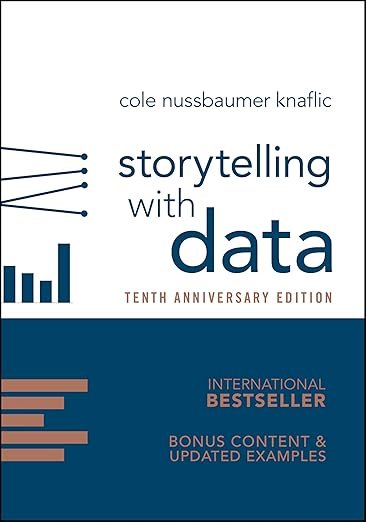

Book "Storytelling with Data" (Storytelling with Data): How Do You Make the Numbers Speak?
Author: Cole Nussbaumer Knaflic
The Idea in a Number
3 seconds! This is the average time an audience gives to a chart or slide presented before them to decide whether they will pay attention to it or ignore it. If your data is complex, filled with random colors, and doesn't convey its message within these three seconds, you've lost their attention forever, no matter how important or accurate the numbers you're presenting.
The Big Idea
Silent numbers and data do not change the world; it is the stories we tell using this data that drive people to make decisions. This book takes us from the stage of traditional and dry "data presentation" to the skill of "visual communication"; by teaching us how to eliminate clutter, direct reader attention, and create a visual narrative that makes complex analyses understandable and impactful on the human mind.
3 Life Lessons from This Book
- Eliminate Visual Clutter: Every element you add to the screen (gridlines, thick borders, multiple colors, 3D effects) consumes a "cognitive load" from the reader's mental energy. The golden rule: any ink or pixel that doesn't add real value to understanding the data should be deleted immediately. (3D charts are the first enemy of data!).
- Direct Attention Intelligently: Don't leave your audience searching for the main idea. Use pre-attention properties (such as changing the color of the most important column to gray versus red, or enlarging the font size of a specific number) to automatically guide the reader's eye toward the "signal" you want to convey before they even start reading the text.
- Context is King: A chart without context is just geometric shapes. Before you start designing any chart, you must know: Who is your audience? What do you want them to know or do? And what is the story supporting this action? Don't settle for just displaying what you found; explain why it matters to them.
Unforgettable Quotes
"Data in itself does not make decisions; people do. And our job is to make this data clear enough to guide their decisions."
"Don't assume data will speak for itself; because it rarely does. You are the one who must give it a voice."
Who Is This Book For?
For data analysts, sales and marketing managers, executives, and anyone who uses presentation software (PowerPoint) or spreadsheets (Excel) to convince others of an idea or make decisions based on numbers.
 Ask Yamami
Comments (4)
No comments yet. Be the first to comment!