

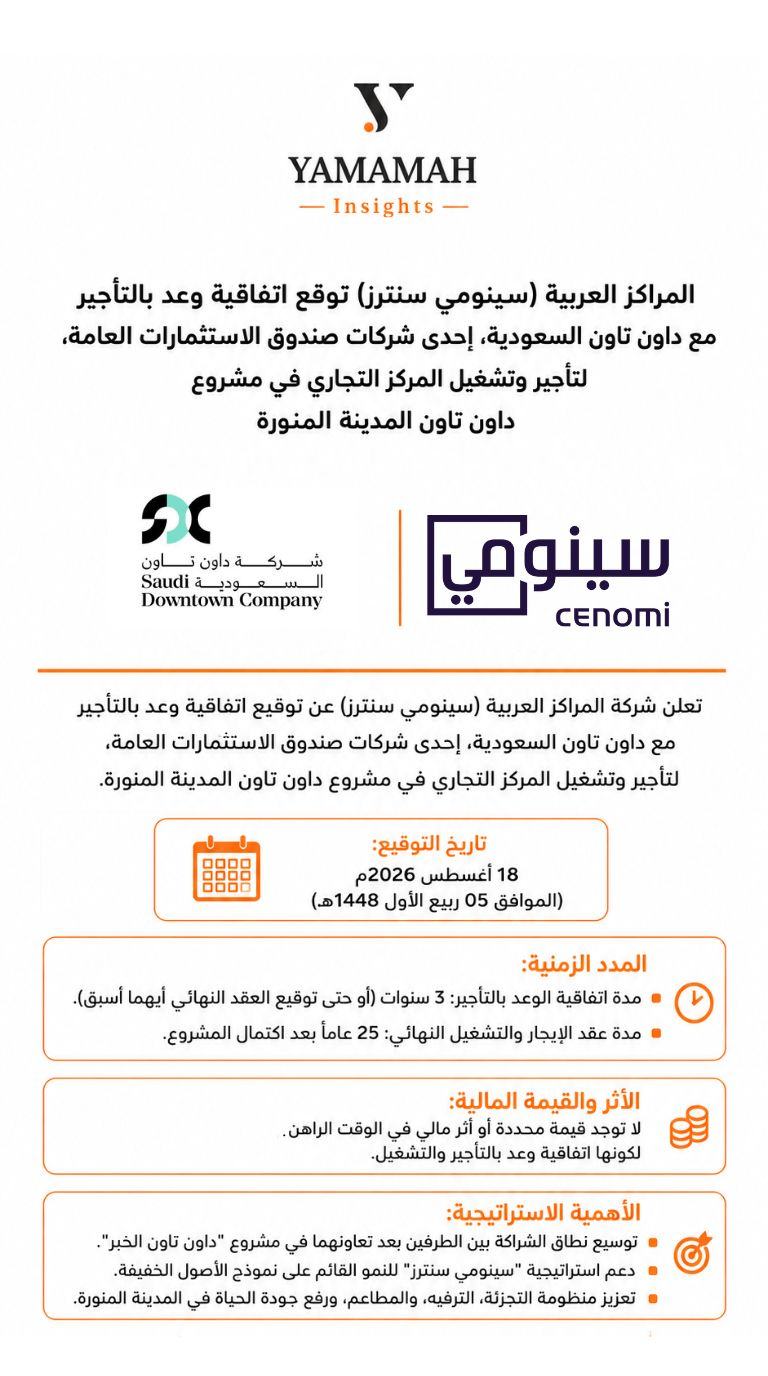
Arabian Centres Company (Cenomi Centers) announced the signing of a lease promise agreement with Downtown Saudi Arabia, a company owned by the Public Investment Fund, to lease and operate a shopping center in the Downtown Madinah project.
This strategic partnership is part of the company’s efforts to increase its total leasable area and expand its business in the retail and entertainment sector. This will contribute to creating modern commercial destinations that support operating revenues and enhance opportunities for sustainable growth in investment-attractive destinations.
Students from Al Yamamah University discussed the strategic and financial dimensions of this agreement and its implications for the company’s expansion, as follows:
Asset-light model and support for cash flows and profit margins
Student Abeer Altuwaijri @Abeer Altuwaijri explained her view, saying: "I believe that Cenomi Centers’ move toward an asset-light model—"in which the company manages and operates the center in return for fees, but does not bear the cost of constructing it"—is a positive step, as it enables the company to expand without incurring high development and construction costs. This could support cash flows and improve profit margins over the long term.
Presence in Madinah also represents an important opportunity to benefit from the expected growth in visitor numbers under the targets of Vision 2030. It could increase interest in the project and boost demand for leasable space. In addition, repeating the partnership with Downtown Saudi Arabia reflects Cenomi Centers’ expertise in managing and operating centers and may support its position as a preferred operator for major projects.
As for the stock, the market may begin pricing in part of the expected impact before operations commence, but the larger impact will likely be tied to execution becoming clearer and the project approaching the generation of actual revenues."
Long-term strategic impact and lower capital costs
Student Rimas Almashali @Rimas Almashali shared her opinion, stating: "In my view, the agreement is more strategically positive than it is currently financially impactful. There is no impact on revenues or cash flows at present, but the asset-light model may support growth with better margins and lower capital costs.
Expansion in Madinah and the partnership with Downtown Saudi Arabia also enhance future growth opportunities, but the actual impact will appear only once the project is completed and operations begin."
Measured financial expansion and future occupancy-rate challenges
Student Ghadah Alwallan @Ghadah Alwallan noted: "I believe the agreement is positive in terms of expansion without bearing the cost of constructing the project, but its financial impact remains unclear because it is currently a lease promise rather than a final contract.
Its actual viability therefore depends on the terms of the contract and occupancy rates once operations begin."
Reducing capital burdens and pressure on the balance sheet
From an analytical perspective, financial analyst Hamad Alsaeed, @Hamad Alsaeed, said that the agreement between Cenomi Centers and Downtown Saudi Arabia essentially represents a long-term commitment whose financial impact will come years later.
The contract signed on August 18, 2026 is a three-year "lease promise" that, upon completion of the project, will lead to an actual 25-year lease and operating contract for the Downtown Madinah shopping center, with no specified contractual value or impact on the income statement at the current stage.
This agreement expands the existing partnership between Cenomi and the Public Investment Fund, which began with Downtown Al Khobar, under an asset-light approach that spares the company the substantial capital expenditures required to build shopping complexes from scratch. It also reduces the base of fixed operating expenses associated with construction and direct operation, potentially improving the operating profit margin compared with the traditional ownership model.
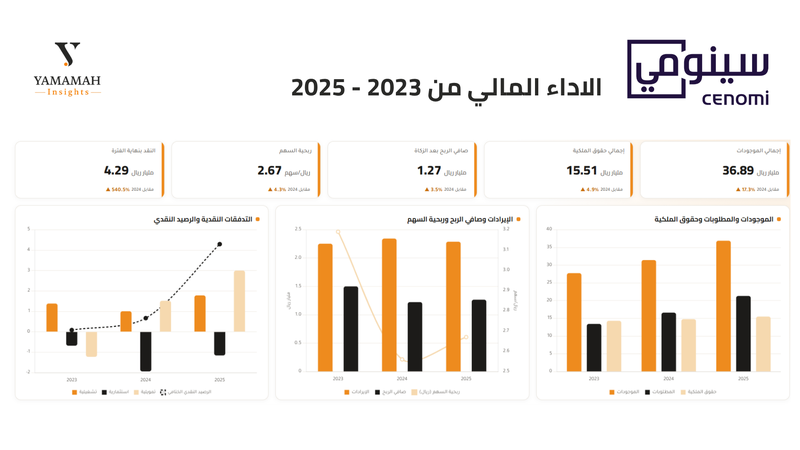
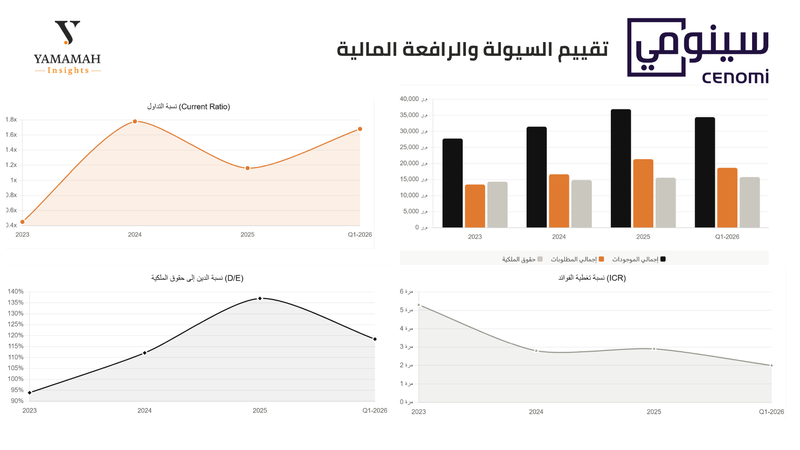
This approach takes on added significance in light of the company’s financial indicators. The debt-to-equity ratio rose from approximately 95% in 2023 to a peak of 137% in 2025, while the interest coverage ratio declined from 5.3 times to approximately 2.1 times by the first quarter of 2026 and then to 1.8 times by the end of June 2026. This makes expansion through management and operations a path that eases pressure on both the balance sheet and margins.
Converting the impact into revenues remains contingent on project completion and the signing of the final lease contract, for which no date has yet been set.
Disclaimer: This material was prepared under the supervision of a “Yamamah Insights” editor with the assistance of artificial intelligence tools for financial education purposes. It does not constitute a recommendation to buy, sell, or hold any security, and it expresses the views of its contributors, not those of the platform.


Comments (9)
No comments yet. Be the first to comment!