
In a decisive step to strengthen its presence across food value chains, the National Agricultural Development Company (Nadec) has finalized its move to obtain full control of "Al-Rai National Livestock Company" after completing all regulatory and financing requirements and conditions related to the ownership structure.
The move follows the fulfillment of the Agricultural Development Fund’s requirements and the mortgaging of additional land in the Wadi Al-Dawasir area to secure the facilities, officially shifting "Nadec" from a "joint venture" model to 100% ownership. This reflects the company’s desire to turn the meat and protein sector into one of its main growth drivers and bring operations under one umbrella, allowing greater flexibility in decision-making and the consolidation of financial results.
Between providing real estate collateral, consolidating the financial impact, and diversifying income sources, Al Yamamah University students discussed the dimensions of this decision and its implications for the food sector and the company’s future growth as follows:
Flexibility of Full Control and Profit Determinants
Student "Rand Al-Khalaf" @Rand Alkhalaf began the analytical reading by saying: "Full ownership gives Nadec greater control over the project, but its financial impact depends on the company’s future performance. Using assets as financing collateral also supports expansion, provided it is carefully planned, while entering the meat sector opens new revenue streams that support local production and food security when managed with focus."
Controlling Profit Margins and Operating Efficiency
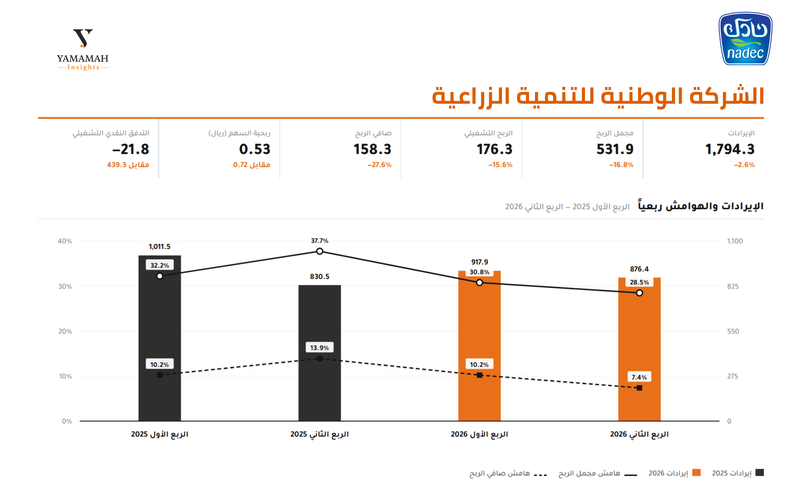
Student "Nouf Al-Ojayan" @Nouf Alojayan explained the dimensions of the expansion, saying: "Expanding into meat and protein reduces reliance on a single activity, but managing multiple sectors requires caution in allocating resources. With the net profit margin declining from 13.9% to 7.4%, expansion must be accompanied by improved operating efficiency rather than simply increased business volume."
Financial Integration and Reducing Concentration
Student "Dina Al-Arjani" @Dina Alarjani shared her analytical reading of the dimensions of full ownership, saying: "Nadec’s 100% ownership of Al-Rai is a positive step that ensures full control and the inclusion of all revenues in the financial statements.
Expansion into meat reduces concentration in dairy and supports food security, although its impact on profits depends on controlling operating and financing costs."
Strategic Phasing and the Operating Performance Test
Student "Rabiah Al-Muqait" @Rabiah Almugait explained her view, saying: "The acquisition is a strategic step toward building an integrated food system, but it is too early to link it directly to higher profits before evaluating operations and margins.
Mortgaging assets supports expansion, but it requires monitoring financial obligations and the extent to which results are reflected in profitability."
Balancing Risks and Regulatory Control
Student "Yazan Hamoud" @Yazan Hamoud explained aspects of the decision, saying: "Full ownership strengthens control over decisions and operations, but the financial impact depends on improving efficiency after integration.
Mortgaging land to finance expansion supports growth, provided risks are controlled, while entering the meat sector represents a complementary diversification of the core business, provided management maintains its focus."
Growth Momentum in the Protein Sector and Risks of Fragmentation
Student "Albatool Bedairi"@Albatool Bedairi highlighted the operating balances, saying: "Expansion into protein provides a new growth engine that reduces reliance on dairy, with sector sales rising by 99.19% in the second quarter of 2026.
However, as activities expand, administrative efficiency and operational integration become essential to prevent costs from rising."
Monetizing Real Estate Assets and Generating Growth
Colleague "Lujain Al-Qurashi" @Lujain Algorashi presented her analytical perspective, saying: "Full control gives Nadec complete control over production, costs, and revenues in the livestock sector.
Using real estate assets to obtain financing is also a good use of assets to support expansion and diversify income sources in service of food security."
Maximizing Added Value and Supply Chains
Student "Jumana Al-Shahri" @Jumana Alshehri added her analysis, saying: "The acquisition helps consolidate revenues and reduce concentration in a single source of income, provided operational focus is maintained. The mortgage enables expansion without disposing of assets, while expansion in livestock strengthens supply chains and local production."
The Financial Impact of Restructuring and Mortgage Efficiency
Student "Faiz Al-Haj" @Faiz Alhaj highlighted the financing structure, saying: "The transition to full ownership allows all revenues and expenses to be fully consolidated in the financial statements, increasing total revenues, while profitability will depend on Al-Rai’s margins.
Mortgaging land in Wadi Al-Dawasir in exchange for government financing is an excellent way to activate assets and reduce financing costs, thereby enhancing the flexibility and control needed to successfully implement the strategy."
Vertical Expansion and Leveraging the Value Chain
Student "Nouf Al-Anazi" @Noof Alanazi stated in her analysis: "Full ownership supports revenue diversification and enhances Nadec’s ability to benefit from the value chain in the meat sector, provided the expansion is managed efficiently and operational focus is maintained."
Monitoring Financing Returns and the Long-Term Impact
Student "Shahad Al-Khamis" @Shahad Alkhamis presented the financial reading, saying: "The transfer of ownership supports revenue growth through the consolidation of financial results, while requiring close monitoring of the impact of costs and financing on net profit.
Using real estate assets for financing reflects efficient resource utilization, and its success depends on generating operating returns that exceed the cost of financing."
Sector Independence and Limiting Operational Risks
Student "Fay Al-Dosari" @Fay Aldossari emphasized the strategic dimensions, saying: "The decision represents an integrated step combining financial growth with alignment with food security objectives.
A mortgage to obtain accessible government financing is a smart option compared with commercial loans, but the success of the livestock sector requires efficient management to address its specific operational risks."
Monitoring the Actual Financial Impact After Consolidation
Student "Arwa Al-Huwaiti" @Arwa Alhuwaiti pointed to the financial indicators, saying: "Moving to 100% ownership gives Nadec all revenues and profits instead of recognizing only its share, but assessing the actual impact requires monitoring revenue growth, profit margins, and operating costs after accounting consolidation."
Strengthening Bargaining Power and Consumer Confidence
Student "Nada Asiri" @nada Asiri highlighted the competitive dimensions, saying: "Expansion into the meat sector reduces reliance on a single activity and opens new growth opportunities.
Greater control over the value chain improves efficiency, reduces import costs, and strengthens consumer confidence; success depends on balancing expansion and profitability."
Maximizing Company Assets and Aligning with Vision 2030
Student "Mashael Al-Anazi" @Meshail ALANazistated in her analysis: "The full acquisition expands Nadec’s business and increases its income from the meat sector, while using land as collateral effectively supports financing the expansion. Increasing local production reduces reliance on imports and supports the objectives of Vision 2030."
Managing Rapid Expansion and Protecting the Core Business
Student "Rahaf Al-Anazi"@Rahaf Alanazi highlighted the requirements of expansion, saying: "Entering the meat and protein sector opens additional revenue sources by leveraging Nadec’s expertise, but rapid expansion requires careful management to maintain the efficiency of the core businesses."
The Structural Advantage of Accessible Government Financing
Student "Ahmed Al-Jadaan" @AHMED ALJADAANhighlighted the financing advantage, saying: "Mortgaging the Wadi Al-Dawasir land in favor of the Agricultural Development Fund is a smart financial option. Amid high interest rates and SAIBOR, accessible government financing protects the company’s liquidity and cash flows, while putting underutilized assets to work as financing ensures expansion without putting pressure on cash."
Integrating the Protein Sector and Financing Structure to Promote Sustainable Growth
In an analytical reading, financial and economic analyst "Hamad Al-Saeed" @Hamad Alsaeedadds: The significance of Nadec’s acquisition of its partner’s entire stake in Al-Rai National Livestock Company stems more from its position in the value chain than from its value of SAR 23.69 million for 49% of the shares. With ownership complete, the company is expected to move from equity accounting to full consolidation, bringing the joint venture’s assets and financing liabilities into its consolidated statements. The requirement for the Agricultural Development Fund’s approval of the ownership restructuring, along with the additional mortgage and corporate guarantee, may reveal the scale of the obligations assumed by the acquired entity.
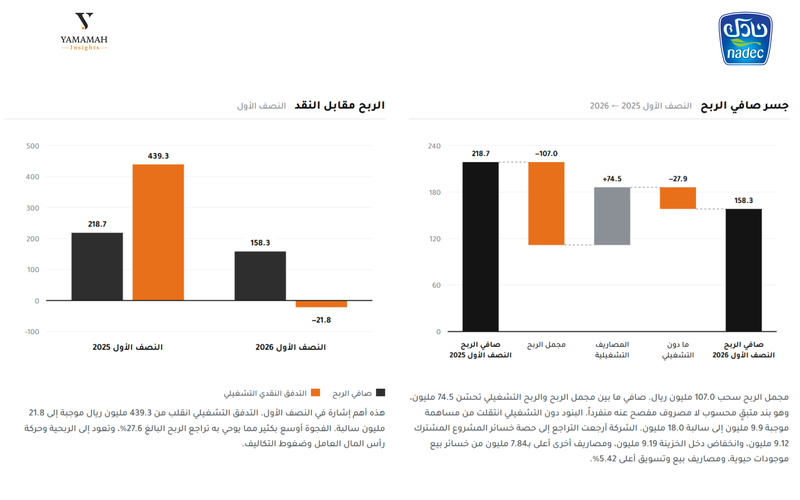
The first-half results provide context. Net profit declined to SAR 158.3 million, down 27.6%, while the cost of sales as a percentage of revenue rose by 5.04 percentage points. The second quarter also included a SAR 9.12 million share of the joint venture’s losses, compared with SAR 0.50 million in the corresponding quarter. Meanwhile, protein-sector revenue nearly doubled year over year, and the Haradh slaughterhouse entered the operating phase.
The accounting impact is expected to precede the operating impact until the project’s phases are complete.

Comments (8)
No comments yet. Be the first to comment!