
Ministry of Energy Approval for SABIC: Analyzing the Dimensions of the Methanol Plant Expansion
Saudi Basic Industries Corporation (SABIC) announced that its subsidiary, Saudi Methanol Company (AR-RAZI), had received approval from the Ministry of Energy to allocate the feedstock required to establish a new methanol production plant in Jubail Industrial City.
The company explained in its statement that the new plant will have a production capacity of 1.8 million tons annually, noting that the expansion is aligned with its strategy of achieving sustainable, long-term value by focusing on its core businesses to maximize returns for shareholders.
SABIC indicated that it would announce any material developments at a later stage, including the project's final investment decision, affirming that the expansion would help strengthen the Kingdom's position in developing national industries and support the objectives of Vision 2030.
Amid enhanced production capabilities and global market challenges, students from Al Yamamah University discussed the industrial expansion's strategic and financial implications for the company's performance as follows:
Lower Supply Costs and Awaiting the Investment Decision
Student "Hana Almutlaq" @Hana Almutlaq began the analytical review by saying: "I believe the announcement is positive for SABIC because the availability of feedstock will help it expand production, reduce supply problems and supply costs, and increase methanol production, which could raise sales and revenue in the future. However, we cannot clearly determine the financial impact at this stage because the project has not yet reached the final investment decision."
A Financial View of Operating Margins and Supply Challenges
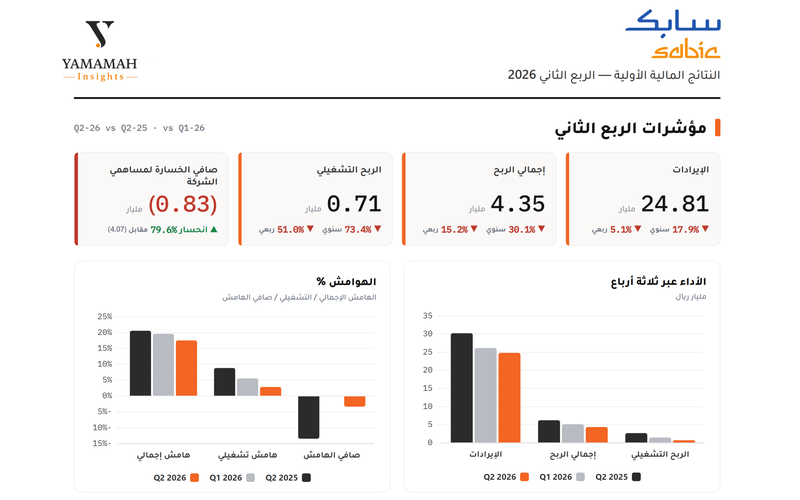
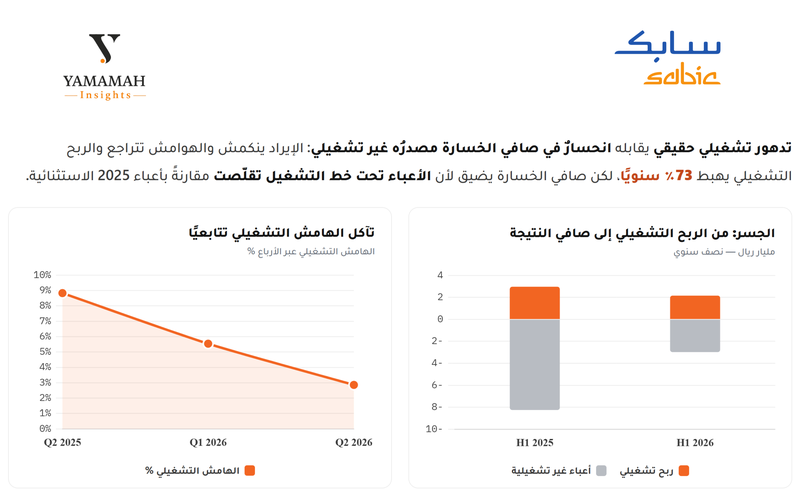
Student "Amal Mansi" @Amal Mansi provided an analytical summary based on the financial data, saying: "Local availability of feedstock reduces core production costs and gives the company the competitive advantage needed to halt the erosion of its operating margin, which fell from 9% to 3% over one year. Local production in Jubail also protects the company from shipping risks and global tensions, helping move it out of its current loss-making position. However, this stage requires engineering studies to update the financial feasibility before construction is approved."
Profitability Matters More Than Production Volume
Student "Albatool Bedairi" @Albatool Bedairi expressed her view, saying: "Adding 1.8 million tons annually could support SABIC's future sales and revenue, but the most important factor is profitability, not merely production volume, because the actual impact depends on methanol prices, demand, and operating costs. Therefore, we need to await the final investment decision and details of the project cost before assessing its financial impact."
Competitiveness and Operating Costs
Student "Yazan Hamoud" @Yazan Hamoud shared his opinion, saying: "I believe the announcement is initially positive because feedstock availability supports cost reduction and enhances the project's competitiveness. Adding this volume of production could increase sales in the future, but the real assessment depends on methanol price levels, operating costs, and the final investment decision."
Supply Stability and Competitive Advantage
Student "Jumana Alshehri" @Jumana Alshehri added her analysis, saying: "I believe feedstock availability gives SABIC a competitive advantage through greater cost and supply stability, while expanding production could support future sales and revenue growth. However, the actual financial impact depends on the study results, as well as methanol price levels at the time of operation."
Avoiding Shipping Disruptions and Meeting Demand
In the same context, colleague "Lujain Algorashi" @Lujain Algorashi explained: "I believe the announcement is positive because feedstock availability helps reduce production costs and supports the project's competitiveness. Local expansion also gives the company greater flexibility and reduces its exposure to shipping disruptions, strengthening its ability to benefit from future demand."
Capitalizing on Future Demand and Its Impact on Performance
Student "Dina Alarjani" @Dina Alarjani said: "I believe SABIC's expansion of methanol production is a positive step, particularly after feedstock was allocated to the project, as this will help the company increase production and capitalize on demand. If the project is studied properly, it will have a tangible positive impact on SABIC's performance and growth."
Securing Raw Materials and the Price Challenge
Student "Rimas Almashali" @Rimas Almashali explained: "In my view, feedstock allocation gives SABIC a competitive advantage by supporting the stability of production costs and securing raw materials. However, the project's true financial impact will ultimately depend on the investment decision and methanol price levels when operations begin."
Comparing Returns with Capital Costs
Student "Mohammed Almudbil" @Mohammed Almudbil commented: "I believe the news is initially positive, but the key issue is not simply increasing production capacity; it is whether the project will generate a good return relative to its cost. In my view, we need to wait for the project's cost details before making a clear assessment."
Company Flexibility in the Face of Supply Chain Crises
Student "Noof Alanazi" @Noof Alanazi shared her view, saying: "SABIC's expansion is a positive step, as feedstock availability helps control costs and enhance competitiveness. In addition, increased local production strengthens the company's flexibility in facing supply chain disruptions and higher shipping costs, although the actual impact depends on market prices."
Capital Expenditure and Financing Options
Student "Ghadah Alwallan" @Ghadah Alwallan highlighted the financing aspect, saying: "I believe the financing angle is very important, particularly given SABIC's current decline in operating performance; the plant will require significant capital expenditure. Therefore, its impact on shareholders will depend on how it is financed and whether it generates a return exceeding the cost of capital without putting pressure on cash flows or increasing debt."
Impact of the Expansion on Cash Flows
Student "Arwa Alhuwaiti" @Arwa Alhuwaiti affirmed: "Adding 1.8 million tons annually could support SABIC's revenue, but increasing production capacity alone is not enough; the key is to see how it affects sales, profit margins, and cash flows after operations actually begin."
SABIC's Leadership Among the World's Major Companies
Student "Saif AlGhamdi" @Saif AlGhamdi concluded the discussion, saying: "I believe SABIC has made a good decision that serves its interests. This is unsurprising for a company ranked among the world's top 10 companies in the petrochemicals sector, and, God willing, it will be a positive step that supports the company's leadership in the future."
Sustainable Planning and Engineering Feasibility for the Investment Decision
Student "Fay Aldossari" @Fay Aldossari provided an integrated analysis of the project's dimensions, saying: "I believe feedstock availability reduces operating costs through stable prices and guaranteed volumes, ensuring sustainable financial and operational planning. Production in established complexes such as Jubail also enhances supply chain resilience, helping avoid geopolitical tensions and reduce shipping costs. Financially, adding 1.8 million tons annually will increase sales and market share and improve profit margins and cash flows. However, reaching the final investment decision (FID) first requires determining the cost and schedule through engineering studies (FEED), and confirming feasibility and the financing structure through financial and market studies."
Raw Material Costs and Flexibility in Facing Geopolitical Tensions
Student "Shahad Alkhamis" @Shahad Alkhamis explained her operational perspective: "In my view, securing feedstock at suitable prices and volumes is a key factor in enhancing SABIC's competitiveness, particularly in a sector that relies heavily on raw material and energy costs. Increasing production capacity locally may also give the company greater flexibility in facing supply chain disruptions and geopolitical tensions. Although adding new capacity will create an opportunity to increase revenue in the future, the actual impact will depend on methanol prices, operating costs, and profit margins when full-scale production begins."
Between the Gains from Local Feedstock and Global Market Volatility
In an analytical review, financial and economic analyst "Hamad Alsaeed" @Hamad Alsaeed adds: AR-RAZI, 75% owned by SABIC, has received approval for feedstock allocation for a methanol plant with an annual capacity of 1.8 million tons in Jubail, in a preliminary step preceding the final investment decision.
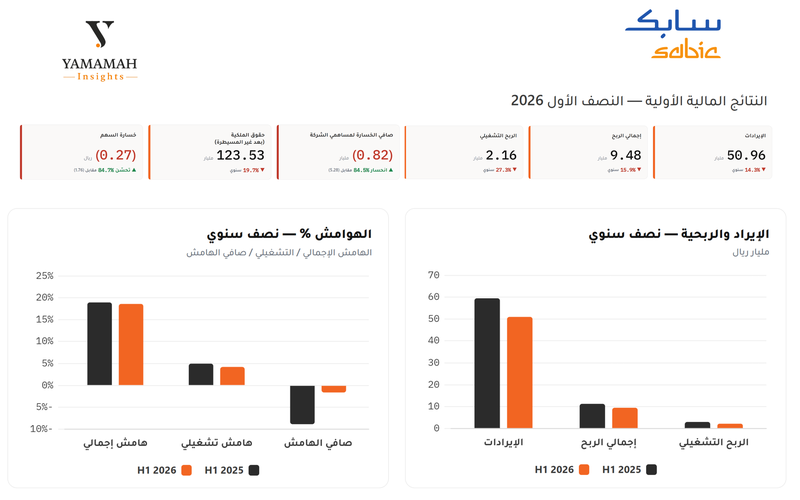
This comes as SABIC continues to feel the effects of geopolitical tensions that have disrupted exports and increased shipping costs. Its revenue fell 14.33% in the first half of 2026 to SAR 50.96 billion, despite a notable improvement in net losses compared with the previous year.
The irony is that the same crisis reduced Iran's exports. Iran is the world's second-largest methanol producer, and the reduction lifted the margins of alternative producers, including Saudi Arabia, while Chinese demand accounts for approximately 70% of the global market, driven by methanol-to-olefins conversion projects.
Once it begins production, the project is expected to improve SABIC's financial performance by diversifying revenue and supporting profit margins, while strengthening the Kingdom's position in a value chain in which it operates the world's largest methanol complex, in line with Vision 2030's industrial diversification objectives in Jubail.
 Ask Yamami
Comments (6)
No comments yet. Be the first to comment!