
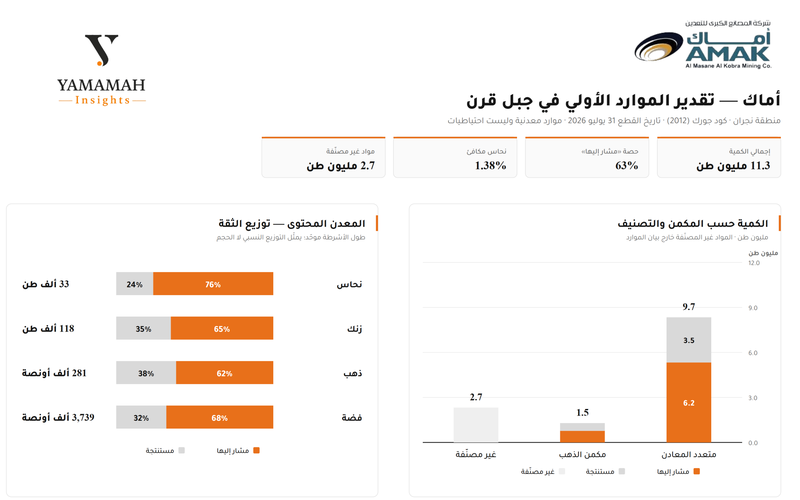
On 19 Rabi’ al-Awwal 1448 AH, corresponding to September 1, 2026, Almasane Al-Kobra Mining Company (AMAK) announced an addendum providing its shareholders with additional technical information on the results of an independent Mineral Resource Estimate (MRE) report prepared by "Cube Consulting Pty Ltd" in accordance with the international "JORC" Code for the "Jabal Qarn" project in the Najran region. The company had previously announced, on August 31, 2026, the discovery of economically significant mineral resources there, including copper, zinc, gold, and silver ores.
The company explained that the addendum aims to make available a document containing additional details and technical data relating to the independent report’s findings, noting that this supplementary disclosure currently has no direct financial impact. The disclosure is intended to enhance transparency and keep investors informed of technical developments concerning the promising mineral discovery.
Discussing the technical importance of international assessment standards and the discovery’s implications for the company’s future performance, Al Yamamah University students discussed the announcement’s dimensions as follows:
The Importance of Technical Data in Assessing Economic Feasibility and Supporting Vision Objectives
Jumana Alshehri @Jumana Alshehri explained her view, saying: "I think the additional technical data is important because it clarifies the quality and quantities of the minerals present, which helps provide a more accurate understanding of extraction costs and the project’s economic feasibility. Disclosing this information also increases the company’s transparency and gives all investors the opportunity to make their decisions based on the same information.
If the discovered resources prove to be economically viable, they are expected to support the company’s production, revenues, and profits in the future. In addition, AMAK’s expansion in the mining sector contributes to developing the non-oil sector, supporting the objectives of Vision 2030, and diversifying the Saudi economy."
The Impact of Operating Costs on Production Efficiency and Sustainability
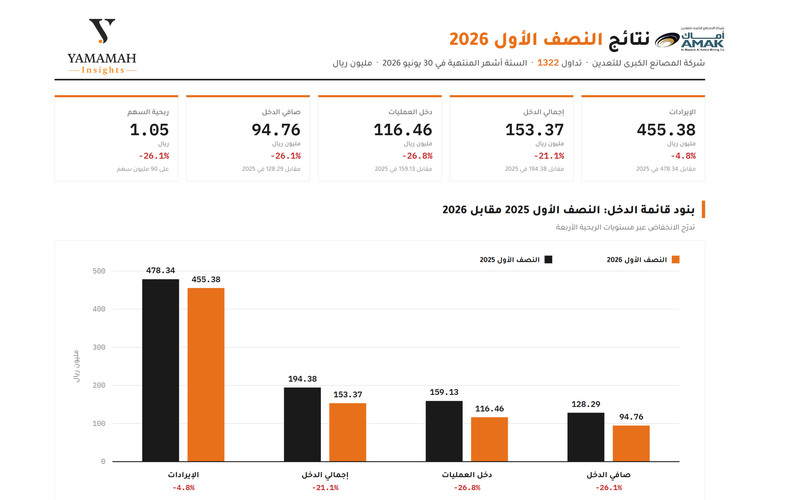
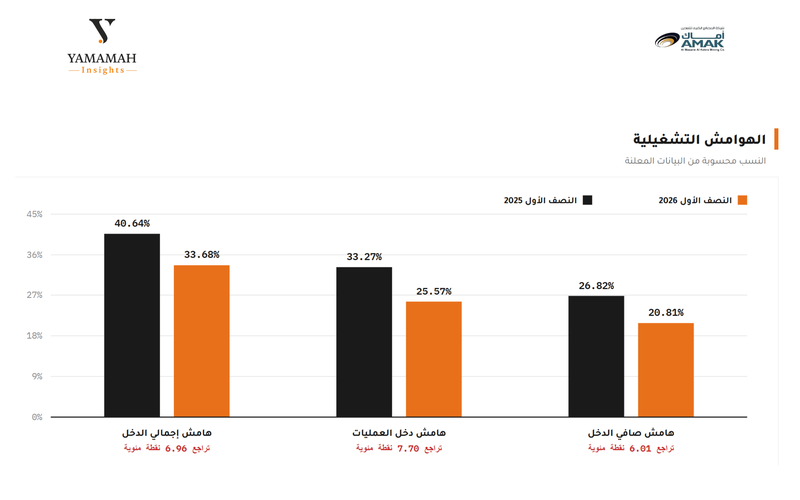
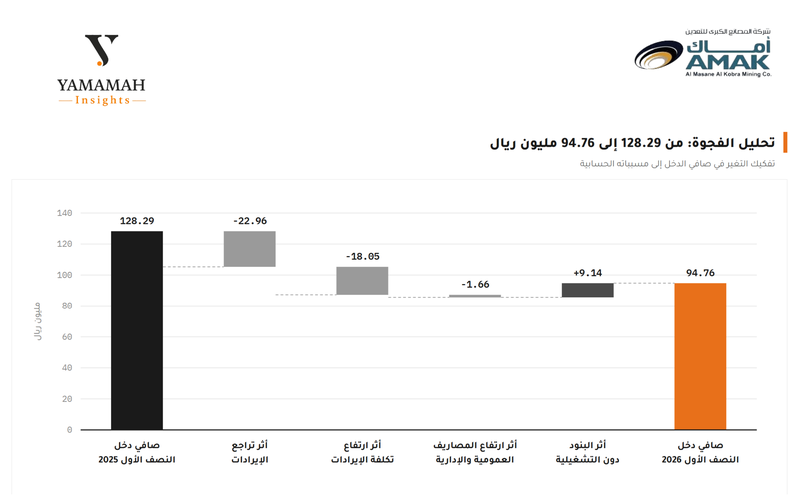
Mohammad Alghaihab @Mohammad Alghaihab shared his view, explaining: "I think AMAK’s current results reflect pressure on its core business more than a structural weakness in the company. The decline in revenues, accompanied by an increase in the cost of revenues, has clearly pressured margins and profitability.
Therefore, the importance of the Jabal Qarn project lies not only in the size of the discovered resources, but also in its future ability to convert these resources into extractable reserves at an economically viable cost.
If the company succeeds in doing so and benefits from its existing infrastructure, we may see greater diversification in production sources and improved operating efficiency. However, the real impact will remain tied to development and extraction costs and metal prices when production begins."
Assessing Resource Quality and Its Impact on the Company’s Future Value
Rimas Almashali @Rimas Almashali noted: "The technical details help investors assess the quality and economic viability of the resources more accurately, and consequently estimate the project’s future impact on the company’s value."
Enhancing Transparency and Reducing Market Uncertainty
Ghadah Alwallan @Ghadah Alwallan added: "In my view, the additional disclosure enhances transparency and reduces uncertainty, particularly by enabling a clearer assessment of extraction and production costs."
The Importance of Geological Confidence and Copper Equivalent Grade in Project Assessment
Rana Alshamrani @Rana Alshamrani explained her view, saying: "In my opinion, the importance of the Jabal Qarn discovery is measured not only by the resource size of 11.3 million tonnes, but also by the quality of the ore and the level of confidence in it.
The average copper equivalent (CuEq) grade of 1.38% provides a clearer picture of the minerals’ economic value, while classifying 63% of the resources as Indicated raises the level of geological confidence.
More importantly, the possibility of using existing processing plants could reduce the need for significant capital investment. This is important given that AMAK’s net income margin declined by approximately 6 percentage points in the first half of 2026. Therefore, the discovery’s true value depends on the company’s ability to convert these resources into extractable reserves at a competitive cost and improve profitability in the future."
How the Disclosures Affect Asset Valuation and Support the Non-Oil Economy
Alwaled Alnufaie @Alwaled Alnufaie shared his view, explaining: "In my opinion, AMAK’s supplementary announcement provides a clearer picture of the quality and size of the resources. This helps investors assess the assets more accurately and reduce risks resulting from insufficient information. Confirming the quantities and ore quality may also support production expansion in the future, positively affecting revenues and profitability.
Most importantly, discoveries of this kind strengthen the mining sector and support the objectives of Vision 2030 by diversifying the economy and reducing reliance on oil."
The Financial Impact of the Jabal Qarn Discovery in the Short and Long Term
In an analytical reading of the company’s performance, financial and economic analyst "Hamad Alsaeed" @Hamad Alsaeed explains: The Jabal Qarn announcement marks a shift from an internal estimate announced in November 2025 to the first independent estimate compliant with the JORC Code, prepared by Cube. The difference is between a management promise and a figure auditable by a third party. The report confirms 11.3 million tonnes of classified resources containing 118,000 tonnes of zinc, 33,000 tonnes of copper, 281,000 ounces of gold, and 3.74 million ounces of silver, in addition to 2.7 million tonnes of unclassified resources, which are reported separately and not combined with them.
In the short term, the impact is limited and may even be slightly negative, as drilling and study expenses precede any revenue. However, the site’s proximity—60 km from the existing processing complex—opens the possibility of significant capital savings compared with building a new facility.
In the long term, it adds a resource base that supports revenue sustainability and reduces reliance on the Wadi Qiyan and Khatain plants, particularly amid fluctuations in concentrate volumes. Its alignment with Vision 2030 makes it an indicator of the sector’s depth rather than an isolated case.

Comments (7)
No comments yet. Be the first to comment!