

For decades, cars were more than just a means of transportation for simple and middle-class families; they were a ticket to independence, a guarantee of access to work and schools, and an integral part of the middle-class dream. However, the landscape has drastically changed today, as affordable cars have disappeared from the market, and purchasing a new vehicle has become a heavy financial burden for many families, even turning into a "sentence of debt."
So what happened to the car markets? How did this essential commodity turn into an elite product that drains citizens' pockets?
The Numbers Speak: From People's Car to Luxury for the Rich
In the past, specifically during the oil crisis of the 1970s, small, fuel-efficient cars emerged at prices accessible to everyone. Today, in 2026, the average price of a new car has jumped to about 50,000 dollars, and finding a new car for less than 20,000 dollars has become nearly impossible.
To illustrate the size of the gap, let’s make a simple comparison between yesterday and today:
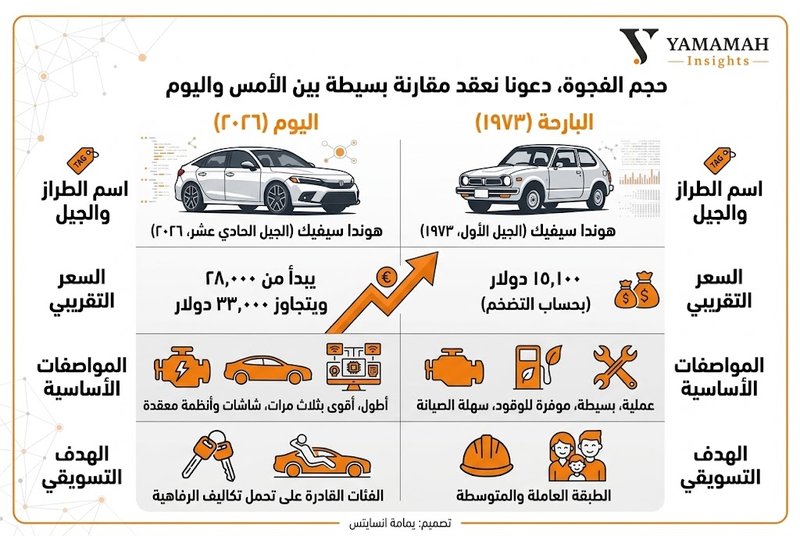
Social Dimensions: When the Absence of a Car Becomes "Compulsory Isolation"
The greatest harm falls on low-income groups. In the past, their safe haven was the used car market, but even this market has today turned into a minefield of overpriced, dilapidated vehicles.
- Exorbitant Maintenance Costs: Due to complex sensors and a labor shortage, maintenance costs have surged by 15% in just the past year. The average mechanic visit now costs about 840 dollars, an amount that around 40% of people do not have as cash liquidity.
- The Dilemma of Tough Choices: The average citizen finds themselves choosing between repairing their car to get to work or paying their car loan. The result? Instances of car repossession (taking the car for non-payment of the loan) have doubled over the past five years, and it is expected to exceed 3 million cases by the end of 2026.
- Isolation and Shame: In the absence of effective public transportation, losing a car leads to job loss, missed medical appointments, and increased psychological stress and feelings of falling behind peers.
Roots of the Crisis: Why Have Companies Abandoned the Average Consumer?
Behind this troubling shift lie intertwined economic and political reasons that can be summarized in two main points:
1. Focus on the Wealthy
Since the late 1970s, major economies have seen a concentration of wealth in the hands of the richest. For car manufacturers, it has become very profitable to sell massive family SUVs and luxury trucks at exorbitant prices to the wealthy, rather than producing affordable cars for lower-income classes. For example, the Ford F-150, which was once a simple work vehicle, now has its luxury version selling for about 90,000 dollars and equipped with massage seats and complex sound systems.
2. Protectionist Policies and Taxes
For decades, successive governments have imposed hefty taxes and tariffs to protect local car companies from foreign competition. This "pampering" of local companies has made them unmotivated to lower prices or improve quality to suit the average consumer. With tariffs reaching 25% or more on foreign cars and parts (especially from China), the average consumer pays the ultimate price of these policies out of their own pocket.
Possible Solutions: Will Markets Open Their Doors Again?
The picture does not seem entirely bleak, as there are solutions on the table for decision-makers to save the middle class:
- Allowing Alternative Cars: Chinese companies today offer electric cars (like BYD) that outperform popular Western cars and come at prices lower by about 20,000 dollars.
- Partnerships with National Conditions: Instead of a complete ban, these companies could be allowed to sell their affordable cars on the condition that they build their factories locally, employ local labor, and do not receive external government support that distorts competition. Canada has already begun this path by reducing tariffs on some Chinese cars, which will provide Canadian citizens with options close to 20,000 dollars.
- Reviving Free Trade: Ending excessive protectionism will force major companies to return to producing cars that serve the majority of people, not just the elite.
 Ask Yamami
Comments (6)
No comments yet. Be the first to comment!