

Al Kathiri Holding Company announced that its subsidiary, Musanadah Supply Company Limited, had received an award letter to carry out construction work as part of the Joud Residential Project in the Sultanate of Oman.
The award was made by Talaat Moustafa Group Muscat Real Estate Development Company for a value of approximately SAR 110 million (equivalent to OMR 11.28 million), to build 160 residential villas over an execution period of up to 24 months.
This contract, which is subject to the completion of value engineering and is expected to have a financial impact starting in the first quarter of 2027, is the company’s first project outside the Kingdom of Saudi Arabia.
The move supports the company’s strategy of diversifying its revenue sources and seizing regional expansion opportunities in the contracting sector.
Students from Al Yamamah University discussed the financial and strategic dimensions of this expansion and its impact on the company’s revenue growth, as follows:
Taking national expertise abroad and valuing the stock by profit margin, not contract size
Student Mashail Al-Anazi @Meshail ALANazi shared her perspective: “I believe Al Kathiri Holding Company’s regional expansion is a positive step because it opens up new revenue opportunities and reduces reliance on the local market.
International projects also support the Saudi economy by transferring expertise and enhancing the competitiveness of national companies.
The SAR 110 million contract is expected to support revenue growth starting in the first quarter of 2027, with effective cost and cash flow management being essential.
As for the stock, the contract’s size relative to the company’s capital is a positive indicator, but its impact on fair value depends on the profit margin, execution capabilities, and earnings sustainability—not the contract value alone.”
Financing challenges and balancing cash flows amid accumulated losses
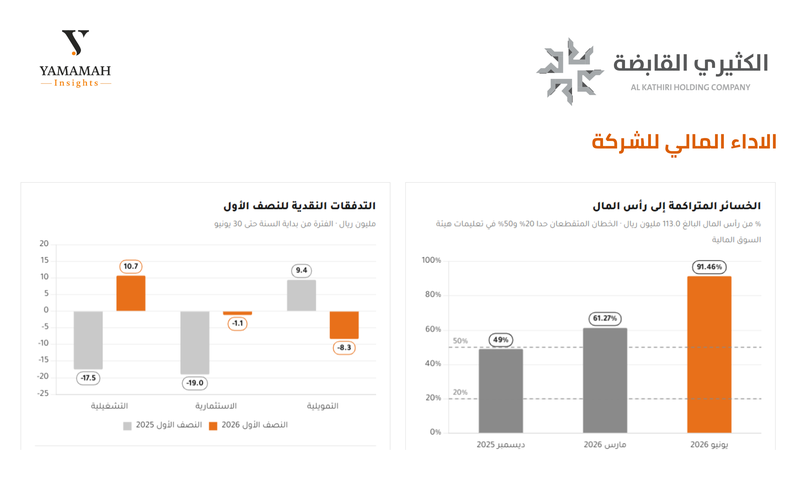
Student Ghadah Alwallan @Ghadah Alwallan offered her view: “What caught my attention was the company winning a contract worth SAR 110 million, despite its accumulated losses reaching 91.46% of its capital.
I believe the real challenge is not just generating new revenue, but the company’s ability to finance the project during execution without putting further pressure on its liquidity and debt levels.
This is especially important because the timing of collecting project receivables may not match the timing of paying its costs.”
Investor confidence and the need to examine actual earnings when assessing the regional contract
Student Rahaf Al-Anazi @Rahaf Alanazi noted: “I believe the contract’s value relative to the company’s capital indicates the project’s importance and scale in relation to its operations, and may strengthen investor confidence in its ability to expand.
However, a fair assessment of the stock requires considering expected earnings, cash flows, and financial obligations—not the contract value alone.”
Execution efficiency as a condition for generating returns from overseas projects
Student Dina Alarjani @Dina Alarjani added: “In my opinion, Al Kathiri’s contract in Oman is a positive step because it opens up a new market for the company and diversifies its income sources. Its considerable value relative to capital also gives the company an opportunity to grow.
However, the contract value does not mean the entire amount represents profit; the outcome depends on execution costs, meeting the timeline, and collecting receivables.
If the project is executed efficiently, it could support the company’s performance and improve its chances of winning other regional projects.”
Managing operational and logistical risks to maintain stable profit margins
Student Zikra Abdulkarim @Zikra Abdulkareem affirmed: “In my opinion, the contract is a positive step for Al Kathiri Holding, particularly since its execution in 2027 gives the company an opportunity to build more stable cash flows over the medium term.
Regional expansion also strengthens the company’s presence and opens up new markets, but its success depends on the company’s ability to manage operational and logistical risks and maintain healthy profit margins.”
A transformative step supporting medium-term cash flow stability
Student Ryouf Alsewailim @Ryouf Alsewailim remarked: “This is an excellent announcement. Since the project spans 24 months and its financial impact is expected to begin in the first quarter of 2027, it should provide excellent medium-term stability for the company’s cash flows.
The contract’s value being close to the company’s capital is a strong indication of the scale of the expected transformation in the company’s performance and stock valuation.
Taking on its first expansion project outside the Kingdom also highlights the ability of Saudi companies to compete with major regional developers and take national expertise abroad.”
Controlling costs to ensure substantial returns translate into actual profits
Student Nada Asiri @nada Asiri shared her view: “In my opinion, Al Kathiri Holding Company’s award of a contract worth SAR 110 million is a positive step that will help expand its operations and increase its revenue.
Entering regional markets also strengthens the presence of Saudi companies and supports the national economy.
I believe the contract could positively affect the company’s financial performance starting in the first quarter of 2027, although this will depend on successful project execution and cost control.
Generating healthy profits from the contract could help strengthen investor confidence in the company and support future stock growth.”
Whether the award turns into cash flow as a benchmark for assessing future growth
Student Albatool Bedairi @Albatool Bedairi noted: “I believe the company winning a project worth approximately its capital demonstrates its ability to compete and secure major opportunities, and may raise investor expectations for business growth.
But the contract value alone is not enough to determine the stock’s fair value. What matters more is the expected profit margin, execution costs, and the extent to which the project translates into actual profits and cash flows.”
Financing the project and avoiding increased debt to ensure operational returns
Student Yazan Hamoud @Yazan Hamoud added: “What caught my attention is that the project’s value of SAR 110 million is close to the company’s capital, while its accumulated losses have reached approximately 91.46%. This makes overseas expansion both an opportunity and a financial challenge.
I believe the project’s success depends not only on its value, but also on the company’s ability to finance execution, control costs, and collect receivables on time—especially since the project spans 24 months.
In my view, the priority now is to turn this award into a final contract that generates actual profits and cash flows, without increasing pressure on the company’s debt.”
Liquidity challenges amid a decline in the company’s operating cash flows
Student Ahmed Al-Jadaan @ahmed aljadaan affirmed: “It is a bold move by the company to undertake construction of 160 residential villas in Oman as its first overseas project.
Regional expansion is excellent for diversifying income, but the biggest challenge is the waiting period, since the financial impact will not begin until the first quarter of 2027.
Given that the company is currently experiencing a decline in operating cash flows, how will it finance this large project over the next 24 months?”
Understanding the new market environment and adapting to differences in regional regulations
Student Rabiah Almugait @Rabiah Almugait remarked: “I believe this project could be a turning point for Al Kathiri Holding, as it gives the company an opportunity to expand beyond the Saudi market and build relationships in new markets.
However, it is important for the company to pay attention to execution costs, differences in regulations, and the nature of doing business in the new market.
As for the financial impact, I expect the project’s success to depend on the company’s ability to execute the contract efficiently and generate actual profits—not just on the contract value. This will determine how much the company benefits from it in the long term.”
The competitiveness of “Made in Saudi Arabia” and the need for sustainable regional cash flows
Student Fay Aldossari @Fay Aldossari shared her view: “Expansion and risks: The move is positive for diversifying revenue, and the real test will be how efficiently supply chains and operations are managed overseas.
Private sector: National companies winning regional projects enhances the presence and competitiveness of the “Made in Saudi Arabia” brand.
Financial sustainability: Financial statements should reflect stability and ongoing cash flows over the medium term, starting in the first quarter of 2027.
Stock valuation: The contract, worth SAR 110 million, is close to the size of the company’s capital; this is a pivotal milestone that supports future growth and earnings per share.”
Comparing revenue with liabilities and the ability to finance operating costs
Student Mohammad Alghaihab @Mohammad Alghaihab noted: “I believe Al Kathiri winning a project in the Sultanate of Oman is a positive step, especially since it is the company’s first project outside the Kingdom and could open up greater opportunities in the Gulf market in the future. What caught my attention even more, however, was the contract’s size relative to the company’s current financial performance.
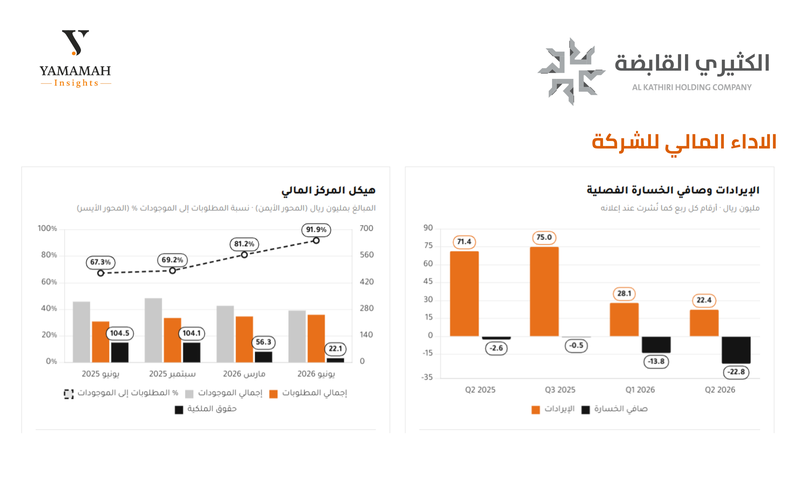
The project is worth approximately SAR 110 million, while the company’s revenue in the second quarter was only SAR 22.4 million, meaning the contract is roughly five times the quarter’s revenue.
This gives an idea of the scale of the opportunity, particularly since execution will take two years, which could support revenue in the coming periods.
However, looking at the balance sheet, we see that equity has declined to SAR 22.1 million, while liabilities now account for approximately 92% of assets.
I therefore believe the biggest challenge is not winning the project, but being able to finance its execution and manage its costs, particularly as losses continue.
In my view, the contract could be a turning point for the company if it can execute it at healthy profit margins and collect receivables regularly. But I do not think its value alone is enough to conclude that the company’s position has improved or its fair value has increased. What matters most in the coming period is the project’s impact on profits and cash flows, not just revenue.”
Higher logistical costs and their impact on the company’s financial performance
Student Raneem Asiri @Raneem Asiri added: “I believe Al Kathiri Holding Company winning a contract of this size is a positive step that will help it develop its operations and improve its financial performance.
Expansion into overseas markets also opens up new opportunities, but the company may face challenges such as differing regulations and higher operating and transportation costs.
In my view, the project could have a positive impact on the stock in the future if the company can generate actual profits and overcome these logistical challenges.”
Turning the initial opportunity into actual liquidity amid fluctuations in the Omani market
Student Thanaa Alshayib @Thanaa Alshayib affirmed: “I believe Al Kathiri’s main benefit is that success on this project could open the door to other contracts outside the Kingdom and strengthen the regional presence of Saudi expertise. However, expansion requires controlling execution and transportation costs and understanding the new market’s regulations in order to translate the opportunity into actual profits.
A project spanning two years provides greater visibility into expected revenue starting in 2027, while liquidity stability will depend on the timing of installment collections relative to execution expenses.
The project’s value being close to the company’s capital is an indicator of its scale, but it does not automatically mean the stock’s fair value will rise. What matters more is the profit margin and the amount of financing required.
One point worth noting is that the announcement concerns an award only, and the final value remains subject to agreement. In my view, the company’s success in turning this opportunity into profits and liquidity is what will make the difference for shareholders.”
Short-term financing challenges amid the risks of overseas operations
Student Shahad Alkhamees @Shahad Alkhamis remarked: “I believe Al Kathiri Holding’s move to expand overseas is a positive step strategically, as it opens up new income sources and diversifies the business away from the local market. The project in Oman, valued at SAR 110 million, is a large contract relative to the company’s size, which is an achievement in itself.
At the same time, I have some short-term reservations:
- The financial impact will not appear until 2027, meaning the company needs to finance and operate the project for an extended period before realizing a return.
- The company already has substantial accumulated losses, and its capital is close to the contract’s value, which adds pressure on liquidity.
- Operational and logistical risks in a new market are significant, particularly when managing projects outside the Kingdom.”
Balancing expansion commitments with internal capital restructuring
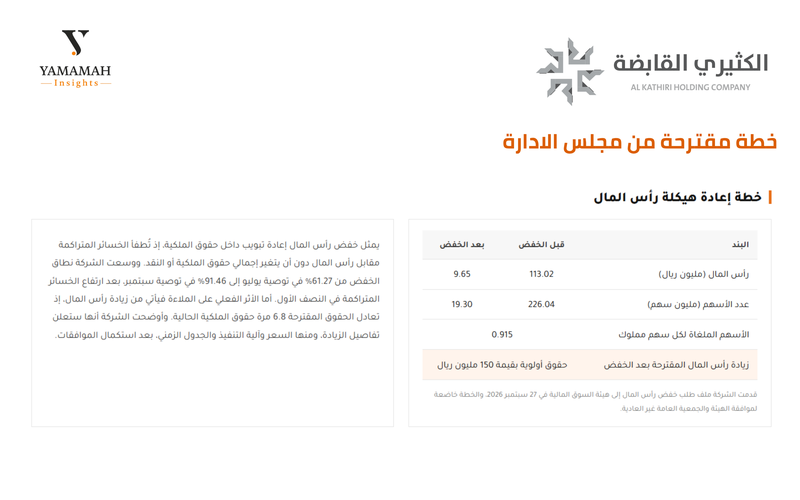
Student Dana Al-Sadoun @Dana Al-Sadoun concluded the comprehensive analysis by saying: “The real turning point here lies in the timing: the project’s financial impact will begin in the first quarter of 2027 and continue for 24 months, coinciding precisely with the critical plans to restructure capital by reducing it and then increasing it.
In my view, the challenge is not the quality of the project itself, but the company’s ability to manage cash flows and meet its overseas expansion commitments while simultaneously correcting its internal financial position during this period.”
Strategic alignment between regional expansion and financial restructuring
In an analytical perspective, financial and economic analyst “Hamad Alsaeed” @Hamad Alsaeed added: Just weeks before the deadline for convening the extraordinary general assembly that will consider reducing Al Kathiri Holding’s capital by 91.46%, the award of the Joud Residential Project in Oman provided an operational rationale for the restructuring plan to raise SAR 150 million through a rights issue. The capital reduction will write off accumulated losses on paper, while the increase will finance working capital for a contract worth SAR 110 million, in a company with cash of approximately SAR 4 million.
Assuming an even execution schedule over 24 months, the project would add approximately SAR 14 million each quarter from 2027 onward—about 60% of what the company generated in the second quarter, following a 67% decline in revenue. The profits from this work will count toward the Kingdom’s gross national product, rather than its domestic product—an avenue Vision 2030 is pursuing through the export of services—with little foreign-exchange risk given the riyals’ pegs to the dollar.
The deal moves the company from managing losses to facing the test of execution, and its impact will be determined more by the margin established through value engineering than by its nominal value.

Comments (3)
No comments yet. Be the first to comment!