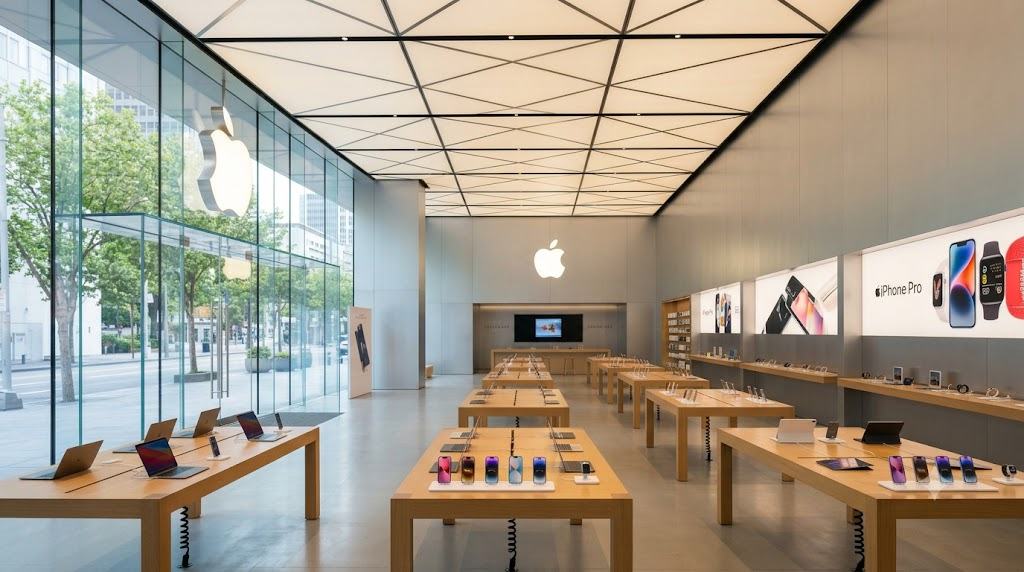

The biggest challenge facing technology companies is no longer selling more devices, but finding new ways to keep customers coming back.
In markets approaching maturity, attracting a new customer becomes more expensive, while retaining existing customers and building long-term relationships with them becomes increasingly important.
From this perspective, Apple’s launch of the Apple Upgrade program in partnership with Klarna cannot be viewed merely as a new way to finance devices. Rather, it represents a shift in the business model, extending the customer relationship beyond the completion of a sale and turning it into one that can be renewed with each usage cycle.
Why did Apple launch the program now?
For years, smartphone companies relied on a simple model: develop a new device, sell it, and then wait for the customer to return several years later to buy the next version. This model succeeded during a period of rapid growth and an expanding user base.
But as phone prices have risen, device lifespans have improved, and consumers have kept their phones for longer, replacement cycles have slowed, and many markets have reached a more mature stage.
In such an environment, retaining existing customers becomes no less important than attracting new ones, prompting companies to seek business models that generate more sustainable revenue.
When the transaction does not end with the sale
The Apple Upgrade program allows consumers to lease iPhones and Apple Watches for 12 or 24 months, and Macs and iPads for up to 36 months, with monthly payments starting at $17.99 for the iPhone.
When the contract ends, customers can return the device, purchase it, or exchange it for a newer one.
On the surface, the program looks like merely a new payment option, but economically, it reflects a shift in how the company builds its relationship with customers.
In the traditional sales model, the financial relationship ends as soon as ownership of the device changes hands. In a leasing model, however, it continues throughout the contract, opening the door to a new usage cycle when the contract ends.
Thus, the program’s value is not limited to facilitating financing; it also reflects a shift in how Apple derives value from its relationship with customers.
The price has not fallen, but the cost of entry has changed
Apple has not reduced the iPhone’s official price or offered direct discounts, but it has changed how consumers bear the cost of obtaining it.
Economically, there is a difference between the product price and the cost of entry. The final price may remain unchanged, but spreading it across monthly payments reduces the initial financial burden and makes the decision to obtain the device easier for a broader segment of consumers.
From a microeconomic perspective, this may reduce some consumers’ sensitivity to the full price, because the purchase decision shifts from making one large payment to taking on a smaller monthly commitment.
This does not mean that the program makes the iPhone less expensive; it makes obtaining it more financially flexible.
From selling a device to building a long-term relationship
Apple Upgrade redefines the value of a customer to the company. Instead of focusing on completing a single sale, the program enables a relationship that lasts throughout the contract and then concludes with options that may bring the customer back into a new usage cycle.
That is why many companies today focus on increasing Customer Lifetime Value (CLV)—the value a customer generates throughout their relationship with the company, rather than only from their first purchase.
For Apple, the program’s success will not be measured solely by the number of leased devices, but by its ability to keep customers connected to its ecosystem and make the decision to upgrade easier and more continuous.
What does this mean for consumers and the market?
For consumers, the program offers greater flexibility in obtaining devices, especially for those who prefer to use the latest versions continuously.
Those who keep their devices for many years may still find traditional purchasing more suitable, so leasing cannot be considered the best option for every consumer.
To implement the program, Apple enlisted Klarna to manage the financing aspects, while Apple focused on product development and the user experience. The publicly available information does not disclose how risks or financial returns are distributed between the two parties, so this partnership can only be assessed based on what the companies have officially announced.
At the market level, the success of this model could prompt other technology companies to develop similar programs, and may gradually affect the role of some telecommunications companies and entities that have traditionally financed phone purchases.
An important point emerges here: the change is not about the device’s specifications, but about how companies reach their customers and how they maintain the relationship after customers obtain the product.
What does Apple’s move reveal?
Apple Upgrade may appear to be a new device-leasing program, but the economic analysis suggests that what is changing is not only the payment method, but the business model itself.
In a market where smartphones have become more mature and retaining customers is no less important than attracting new ones, companies are moving toward business models that create a more enduring economic relationship with consumers, rather than merely completing a single sale.
From this perspective, Apple Upgrade can be seen as more than just a device-leasing program or financing tool; it reflects a shift in how Apple seeks to create value by building a long-term relationship with customers, making upgrading to the latest devices part of a continuous usage cycle.
Therefore, the program’s importance lies not in changing how customers pay for an iPhone, but in revealing how the customer relationship has become a fundamental element of the business model, alongside the product itself.


Comments (9)
No comments yet. Be the first to comment!