

Nufudh Food Products Company announced on September 2, 2026 that the General Authority for Competition had issued its non-objection to the completion of the economic concentration transaction related to its acquisition of a stake representing 65% of the capital of Al-Taam Al-Wafir Company, dated September 1, 2026.
This development follows the company’s previous announcement on August 19, 2026 regarding the signing of a share purchase agreement, with obtaining the Authority’s approval representing one of the key conditions for completing the deal.
The company confirmed that there had been no change to the previously announced consideration, noting that completion of the deal remains subject to satisfying the remaining relevant statutory conditions and requirements before the final completion announcement.
Amid the acceleration of expansion plans and the opening of new avenues for operational integration in the food sector, Al Yamamah University students discussed the implications of this approval and its impact on the company’s investment outlook as follows:
Boosting Profits and the Requirement for Operational Efficiency
Student "Rimas Almashali" @Rimas Almashali began the analysis by saying: "I believe the acquisition could support Nufudh’s future profits by adding new revenue and expanding its business scope, but the actual impact will depend on the company’s ability to achieve efficient operational and financial integration."
Reducing Regulatory Risks and Fulfilling Conditions
Student "Ghadah Alwallan" @Ghadah Alwallan explained the importance of the regulatory development, saying: "I believe the Competition Authority’s approval is an important step in reducing regulatory risks, but the deal’s success remains dependent on fulfilling the remaining conditions and realizing the expected value from the acquisition."
The Financial, Operational, and Technological Dimensions of the Acquisition
Student "Fay Aldossari" @Fay Aldossari presented a comprehensive analysis of the deal’s impact:
- Financial impact: Acquiring a 65% stake enables the consolidation of financial statements and the inclusion of Al-Taam Al-Wafir’s revenue in Nufudh’s financial statements. It also generates economies of scale, strengthens bargaining power with suppliers, and reduces distribution costs through horizontal integration.
- Digital transformation: Integrating enterprise resource planning (ERP), warehouse management (WMS), and point-of-sale (POS) systems enhances operational efficiency, ensures real-time financial data accuracy, and reduces food waste through accurate demand forecasting.
- Governance and antitrust: The Competition Authority’s approval confirms the protection of competition and the prevention of harm to prices, strengthening deal governance, increasing investor confidence, and reducing regulatory risks.
- Healthcare investment and quality of life: The expansion aligns with the social shift toward healthy nutrition and with the objectives of Vision 2030, specifically the Quality of Life Program. It also reduces investment risk by diversifying the portfolio and increases the company’s market value.
Expanding Operations and Growth Opportunities
Student "Dina Alarjani" added her perspective on the expansion outlook, saying: "In my view, the acquisition could be a positive step for Nufudh because it expands its operations and opens up new growth opportunities. Ultimately, however, the deal’s success depends on its ability to integrate the two companies and derive tangible benefits from the acquisition."
Financial Returns and the Rationale for the Valuation
Student "Arwa Alhuwaiti" @Arwa Alhuwaiti highlighted the target company’s financial indicators, saying: "I believe the acquisition could have a positive impact on Nufudh, particularly since Al-Taam Al-Wafir generated revenue of SAR 52.46 million and net profit of SAR 7.14 million in 2025.
However, the key test after completion of the deal will be the extent to which this growth is actually reflected in Nufudh’s results, and whether the expected returns are commensurate with the acquisition value—especially since the deal’s fixed consideration is SAR 52.7 million and could reach SAR 55.95 million."
The Acquisition as an Offensive Strategy and a Response to Declining Profits
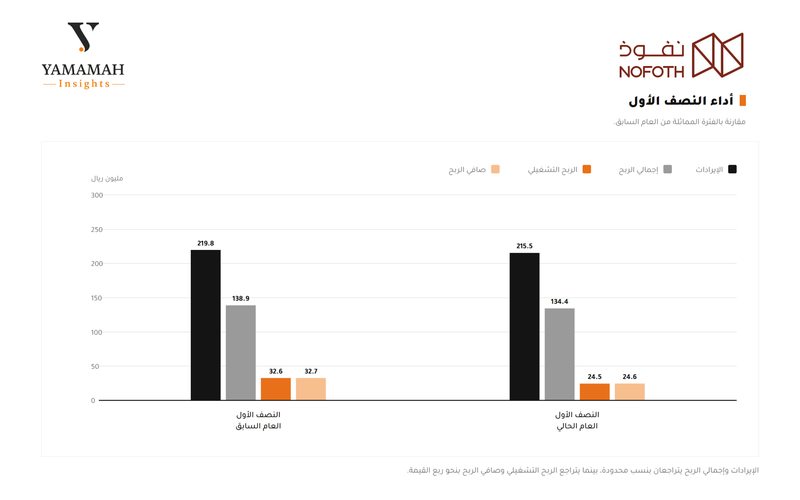
Student "Mohammad Alghaihab" @Mohammad Alghaihab commented on the expansion objectives with the following analysis: "I see the acquisition as an offensive move by Nufudh rather than merely a diversification effort. The company is committing approximately SAR 52.7 million in cash at a time when its operating profits declined in the first half of the year, so the real bet is that Al-Taam Al-Wafir will offset this decline and create a new source of growth.
For me, the deal will be successful if Nufudh can increase revenue without sacrificing its profit margins further. In that case, the acquisition will have created real value rather than merely expanding the scale of the business."
Improving Profit Margins and Managing Liquidity
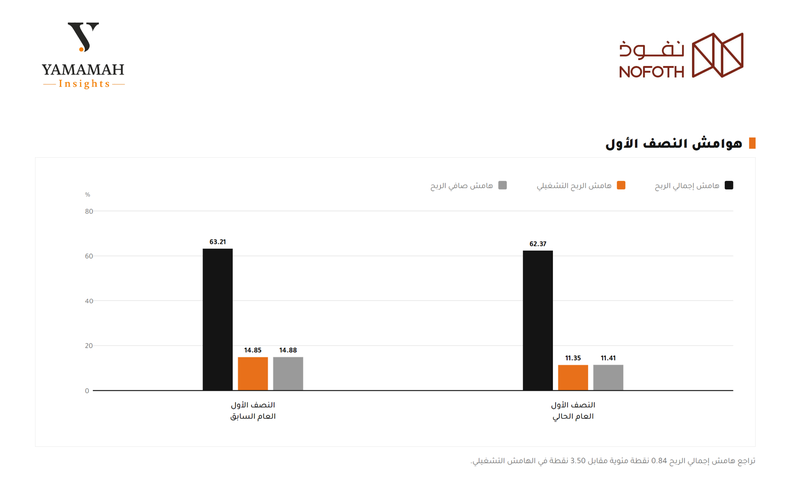
Student "Rana Alshamrani" @Rana Alshamrani said: "I believe the most important impact of the acquisition is not limited to adding new revenue, but extends to improving Nufudh’s overall profitability. Al-Taam Al-Wafir’s net profit margin was approximately 13.61% in 2025, exceeding Nufudh’s standalone margin of 13.16% in the same year. Accordingly, integrating a company with higher margins would provide mathematical and tactical support to the group, helping absorb the operational pressures that emerged in the first half of 2026 and caused Nufudh’s margin to decline to 11.41% as a result of expansion expenses and application commissions.
Expansion into the Healthcare Sector and Diversification of Growth Opportunities
Student "Noof Alanazi" @Noof Alanazi commented on the sector’s strategic impact, saying: "In my view, the acquisition is a successful step for Nufudh because it supports the company’s expansion, enables it to enter the healthcare sector, and opens up new growth opportunities. However, the deal’s success remains contingent on its ability to integrate the businesses and achieve the anticipated benefits."
Integration of Operating Systems and Unification of the Technology Infrastructure
Student "Shahad Alkhamis" @Shahad Alkhamis shared an operational and technological perspective, saying: "I believe Nufudh’s acquisition of 65% of Al-Taam Al-Wafir could help strengthen the company’s revenue and expand its market share, particularly by leveraging the integration of operations and expertise between the two companies. Unifying technological systems, such as enterprise resource planning (ERP) and inventory management systems, will also help improve operational efficiency and data accuracy, supporting the creation of long-term added value."
An Analytical Review of the Financial Structure and Performance Indicators
Financial and economic analyst "Hamad Alsaeed" @Hamad Alsaeed concluded the discussion with a detailed review of the deal figures and financial performance, saying: "Nufudh signed an agreement to acquire 65% of Al-Taam Al-Wafir for fixed consideration of SAR 52.70 million, in addition to an amount not exceeding SAR 3.25 million, payable only if the target company achieves specified results in 2027. This arrangement places part of the valuation risk on the seller.
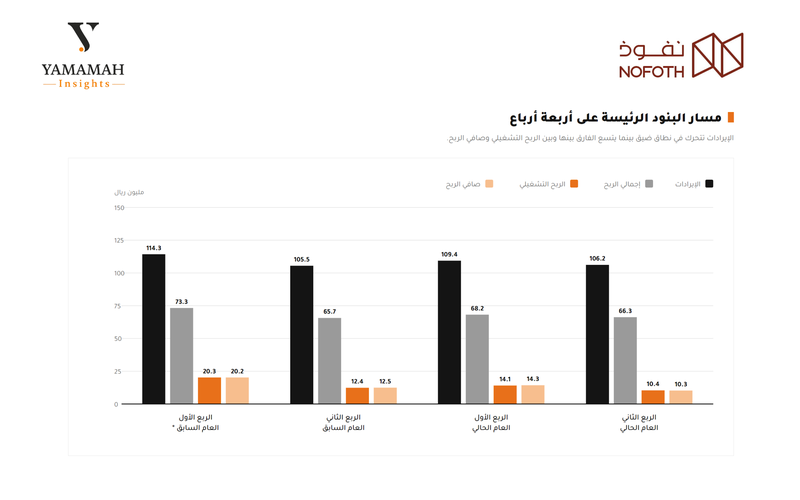
What stands out is that the deal comes after a clear slowdown in Nufudh’s own performance. The company ended 2025 with revenue growth of 17.68%, then its revenue declined by 1.95% in the first half of 2026, while operating profit fell by 25.05%. Gross margin remained near 62%, indicating that the problem lies not in prices or product costs, but in operating expenses—including branches, salaries, and marketing—which increased as a percentage of revenue from 49.0% to approximately 51%.
It is worth noting that expansion on this scale may put pressure on margins in the short term, as integration and operating costs precede the returns. However, it can support revenue and profitability over the long term if managed effectively. The most difficult factor remains that the company operates in a highly competitive sector, where products are similar and customer switching costs between brands are low, making it harder to preserve margins than to achieve growth."
 Ask Yamami
Comments (5)
No comments yet. Be the first to comment!