

Dr. Suleiman Abdulqader Faqih Hospital has completed the acquisition of 100% of the capital of Dr. Mohammed bin Rashid Faqih and Partners, with a total value of approximately 1.59 billion Saudi Riyals paid in cash.
This strategic move comes after the issuance of no objection from the General Authority for Competition, representing a significant expansion of the group's operations in Riyadh, as it will contribute to increasing the company's bed capacity by about three times to reach an integrated operational platform with a capacity of 535 beds.
This acquisition opens the door for the group to enhance its operational efficiency and diversify its payer mix by adding new segments, supporting revenue growth opportunities in the medium term, alongside the expected financial impact represented in the increase in the group's consolidated debt levels due to the costs of financing the deal.
Students from Al Yamamah University discussed the dimensions of this acquisition and its strategic and financial implications for the healthcare sector as follows:
The Importance of Operational Efficiency and Savings in Turning Expansion into Sustainable Profits
Student "Faisal Bashir" expressed his view, saying: "In my opinion, the most important factor in this deal is not the size of the acquisition itself, but the management's ability to achieve operational integration within the first 12–24 months.
It is true that high indebtedness may raise financing costs and affect short-term profits, but if the company succeeds in unifying purchases, improving the utilization of operational capacity, and enhancing the efficiency of medical staff, then economies of scale may offset a significant portion of the cost of debt.
Moreover, acquiring an existing hospital provides the company with rapid expansion and a larger market share compared to building a new hospital, which requires more time and capital before achieving any returns. Therefore, I believe that the success of the deal will be measured by the management's ability to convert the expected savings into sustainable cash flows and profitability, not just by completing the acquisition."
Financial Flexibility and Shortening Establishment Obstacles
Student "Mohammed Bashir" shared his opinion, clarifying: "The no objection from the Competition Authority primarily aims to prevent monopolies and protect prices and quality of services for patients in the city.
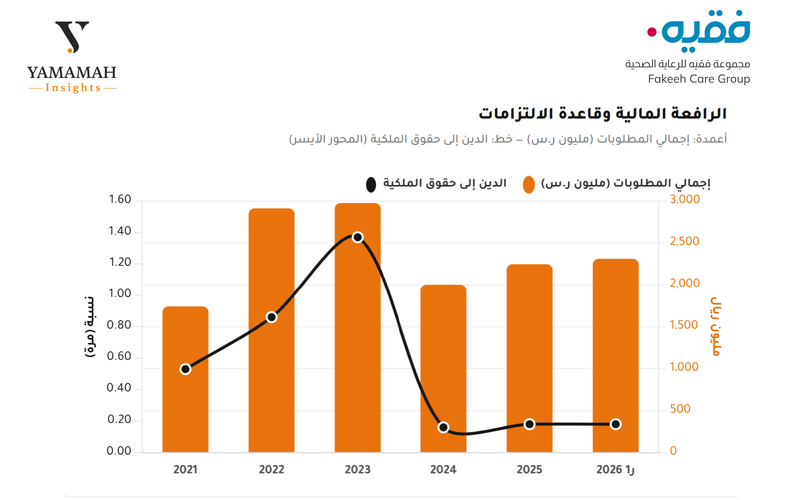
Financially, looking at Faqih's current indicators, the (debt/equity) ratio is very low, giving the group flexible room to bear the debts of the deal without significant pressure on financing costs or liquidity indicators.
Strategically, the acquisition provides many years of construction and licensing to have 350 beds ready immediately, and the largest operational savings come from negotiating power for drug and equipment supply chains and unifying support departments."
Doubling Capacity and Supporting Revenues
Student "Rimas Almashali" @Rimas Almashali expressed her view, saying: "In my opinion, this deal represents a strategic step that enhances Faqih Group's position in the healthcare market in Riyadh, as it doubles its capacity and expands its customer base, supporting future revenue growth opportunities.
Despite the high levels of debt resulting from financing the acquisition, the company's success will depend on its ability to achieve operational integration and benefit from cost savings to offset the impact of financing."
Balancing Competitiveness and Identity Challenges
Student "Ghada Alsarheed" @Ghada Alsarheed highlighted other dimensions, saying: "When we cover different concepts such as protecting competition, it reassures patients and insurance companies of continued competitiveness and the absence of monopolies, which obliges the new entity to offer attractive pricing packages.
As for the financial impact, it puts pressure on the budgets due to the large size of financing, shifting the focus towards high-margin performance and services to quickly cover costs.
The third and most important point is growth and positioning, as it gives the group a market share and immediate presence, presenting it with the challenge of identity choices (either merging the hospital under the "Faqih" brand or temporarily combining them).
From an operational integration perspective, it reduces advertising expenses by merging campaigns, facilitates patient transfers between branches, and increases the brand's attractiveness to attract top medical talents. Therefore, when we take and move towards concepts, we must think of all aspects for the beneficiary, investor, and owner and progress accordingly."
Return on Investment as a Measure of Evaluation
Student "Ghadah Alwallan" @Ghadah Alwallan added, questioning: "In my opinion, the most important question after completing the deal is not just whether revenues will grow, but whether this acquisition will yield a return that exceeds the cost of capital? Because financing the deal with increased debt means that its success will be measured by the acquired hospital's ability to generate profits and operations higher than the investment cost, not just by increasing the number of beds or the size of the group."
Accelerating Growth and Building Investor Confidence
Student @شهد المحيسن commented: "I see that Faqih's acquisition is a strategic step to accelerate growth, as buying an existing hospital saves time and construction costs and adds operational capacity and revenues more quickly.
It is true that financing the deal in cash while bearing debts may temporarily raise financing costs, but if the company succeeds in achieving operational savings such as unifying purchases and enhancing the efficiency of utilizing staff and assets, this may positively reflect on profitability in the future.
Moreover, the approval of the General Authority for Competition reflects that the deal does not harm competition or the interests of beneficiaries, which is an important element for sustainable growth and investor confidence."
Accelerating the Expansion Wheel and Improving Future Efficiency
Student "Mohammad Alghaihab" @Mohammad Alghaihab pointed out that: "Faqih's acquisition of an existing hospital is a strategic step to accelerate growth, as buying a ready facility saves years of time and construction costs, adding operational capacity and revenues more quickly compared to building a new hospital from scratch.
Although financing the deal in cash and bearing part of the debts may raise financing costs in the short term, the management's success in achieving operational integration, such as unifying purchases and benefiting from shared staff and services, may offset these costs by improving efficiency and increasing profitability in the future.
Moreover, the approval of the Competition Authority reflects that the deal is not expected to harm competition or negatively affect patient choices, supporting the sustainability of this expansion.
In an analytical reading of the company's performance, financial and economic analyst "Hamad Alsaeed"@Hamad Alsaeed stated: Strategically, the acquisition of Dr. Suleiman Faqih Hospital Group of the entire share of Dr. Mohammed bin Rashid Faqih for 1.59 billion Riyals in cash represents a horizontal merger that reshapes the group's competitive position in the Riyadh market, by purchasing a market share and an operationally licensed structure instead of building it organically, aligning with the growing role of the private sector and the path of health privatization, which is one of the targets of Vision 2030.
Operationally, capacity jumps to about three times to reach 535 beds with a medical complex that includes 192 clinics, expanding the internal referral network and allowing for economies of scale that support margins, provided that integration succeeds, which is a test that takes several quarters. Targeting medium insurance segments reduces revenue concentration and accelerates collection, with relative pressure on average revenue per case.
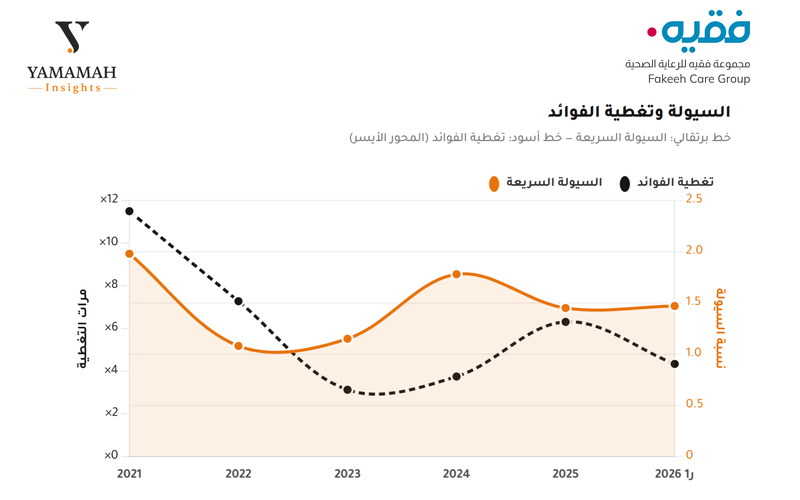
Financially, the structure of the deal reflected clear discipline as 100 million Riyals were held in an escrow account to hedge against contingent liabilities, and the arrangement allowed Dallah Health to exit with a net of 466.77 million Riyals. The group enters the deal with a strong balance sheet, as the debt-to-equity ratio does not exceed 0.18. However, the interest coverage ratio has declined to 4.34 times from 6.31, which remains sufficient to service the debt without providing a comfortable surplus, making it the key indicator worth monitoring in the upcoming quarters.
In conclusion, a deal with a clear strategic logic, but its value to the shareholder will be measured by the quality of execution and the path of free cash flow post-merger, not by the size of the added assets.
Disclaimer: This material has been prepared under the supervision of the editor of “Yamamah Insights” and with the assistance of artificial intelligence tools for financial education purposes, and it does not constitute a recommendation to buy, sell, or hold any security, nor does it reflect the opinions of its authors or the platform.
 Ask Yamami

Comments (9)
No comments yet. Be the first to comment!