

United Cooperative Insurance Company has entered a critical phase in its legal and financial proceedings following a court ruling to commence liquidation proceedings and reject its request for financial restructuring, with the company’s assets handed over to the appointed liquidator.
This judicial development follows a surge in accumulated losses to SAR 459.57 million, exceeding 115% of capital, as well as escalating regulatory penalties that halted its operations and placed pressure on its financial solvency. Meanwhile, the company’s management plans to file a formal appeal with the Court of Appeal in a final attempt to halt the liquidation proceedings.
Al Yamamah University students discussed the legal and financial aspects of this case and its implications for shareholders’ and creditors’ rights, as follows:
Impact of judicial liquidation and challenges to financial restructuring
Student “Albatool Bedairi” @Albatool Bedairi shared her analysis, saying: “The case reflects a graduated regulatory approach to addressing financial distress, with penalties and remedial efforts preceding liquidation. If the appeal is accepted, resuming operations will remain contingent on addressing the causes of distress, demonstrating financial solvency, and obtaining the required approvals from the Insurance Authority.”
Distribution of proceeds and protection against shareholders’ personal financial liability
Student “Rabiah Almugait” @Rabiah Almugait explained the payment priority, saying: “Liquidation protects creditors’ rights and organizes the financial position, as asset proceeds are distributed according to statutory priorities. If the assets are insufficient, shareholders bear the loss only up to the value of their investment, while the remaining debts are dealt with under the Bankruptcy Law.”
Early intervention and future financial regulation
Student “Dina Alarjani” @Dina Alarjani shared her perspective, saying: “This case underscores the importance of early intervention before losses escalate. Liquidation limits the damage and ensures payment of amounts owed in order of priority, while reviving operations after an appeal would require a realistic plan and sufficient funding.”
An analytical look at the timing of decisions and the financial position
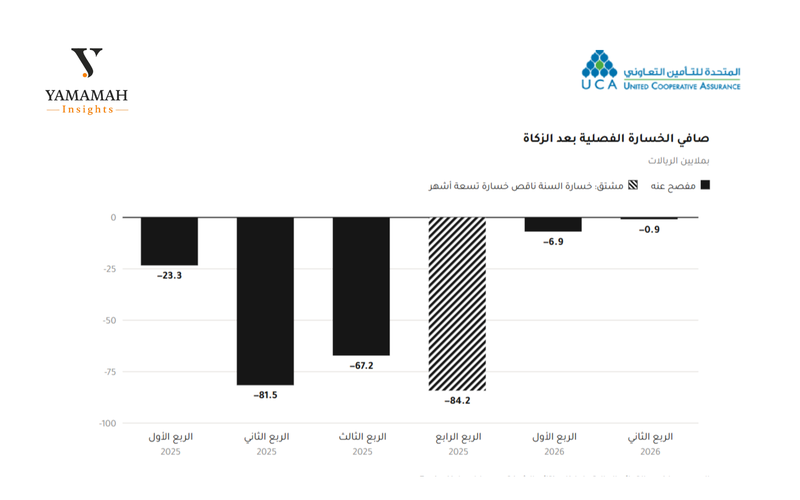
Offering a different perspective, student “Jana Aljebali” @Jana Aljebali disagreed with the preceding views, saying: “The measures were not taken early enough: losses for the first three quarters of 2025 reached SAR 172 million before operations were suspended. Although the second-quarter 2026 loss fell to SAR 0.9 million, this is not enough for a recovery given the erosion of equity to SAR 16.8 million and the liabilities-to-assets ratio reaching 98%.”
Completing the insolvency process and protecting market participants
Student “Noof Alanazi” @Noof Alanazi discussed payment mechanisms, saying: “Liquidation gives creditors priority, and the Bankruptcy Law governs any remaining financial shortfall. Shareholders may face the loss of their entire investment, making it essential to demonstrate overall financial capacity when seeking to resume operations.”
The company’s continuing obligations under insurance policies
Student “Yazan Hamoud” @Yazan Hamoud outlined the operational scope of liquidation, saying: “Liquidation does not extinguish the rights of policyholders or claims that remain in force. The company’s assets are distributed to creditors first, meaning a shareholder’s maximum loss is the entire value of their investment, with no additional financial liability.”
Why early liquidity matters in addressing accumulated losses
Student “Rand Alkhalaf” @Rand Alkhalaf added a perspective on the financial shortfall, saying: “This case illustrates the need to address financial distress before accumulated losses reach 115% of capital. Resolving the crisis is directly linked to providing liquidity and complying with regulatory requirements.”
Legal classification of debts and shareholder liability
Colleague “Lujain Algorashi” @Lujain Algorashi highlighted the ranking of claims, saying: “Liquidation establishes creditor payment priorities without turning the financial shortfall into a personal liability for shareholders. Overturning the ruling would also require addressing the root causes of operational distress.”
Protecting investors’ personal assets
Student “Rahaf Alanazi” @Rahaf Alanazi affirmed the legal implications, saying: “Liquidated assets are used exclusively to meet outstanding obligations, and a shareholder’s loss is limited to the value of their shares, without affecting their personal assets. Any resumption of operations would require regulatory safeguards.”
Graduated penalties and allocation of the shortfall among creditors
Student “Meshail Alanazi” @Meshail ALANazi described the regulatory framework, saying: “The move from regulatory penalties to liquidation reflects a graduated approach to protecting creditors. Creditors bear the shortfall in accordance with bankruptcy provisions, while a shareholder’s liability remains limited to the value of their shares.”
Structural interventions to limit financial fallout
Student “@Thanaa Alshaib” asked what could have been done earlier, saying: “The problem lies in how losses were handled before they escalated. Liquidation is the last resort for protecting rights, even though the company has valuable assets that may not be enough to satisfy shareholders’ claims.”
Ranking priorities and sharing losses among creditors
Student “Ahmed Aljadaan” @ahmed aljadaan explained the financial distribution process, saying: “The Bankruptcy Law applies a strict order, beginning with secured debts, followed by employee claims, and then ordinary creditors, who share what remains through pari passu distribution, while shareholders receive zero riyals.”
New capital requirements for resuming operations
Student “Shahad Alkhamis” @Shahad Alkhamis highlighted the challenges ahead, saying: “The graduated regulatory response was reasonable, but resuming operations requires an injection of new capital and regulatory confidence—both extremely difficult to achieve in the current circumstances.”
The legal basis for the bankruptcy hierarchy and corporate legal personality
Student “Fahad Alruwaished” @Fahad Alruwaished analyzed the court ruling, saying: “Proceeds are distributed to cover liquidation costs, priority debts, and policyholder claims. With accumulated losses at SAR 459.57 million, uncovered debts are written off and the company’s legal personality comes to an end, without requiring shareholders to pay any additional amounts.”
Maximum financial risk and conditions for resuming operations
Student “Fay Aldossari” @Fay Aldossari affirmed the key parameters, saying: “A shareholder’s maximum loss is the share price falling to zero riyals. If there is a shortfall, pari passu distribution applies. Resuming operations, meanwhile, requires an injection of liquidity to bring losses below 50% of capital and meet the solvency margin requirement.”
Why liquidation is a reasonable way to protect creditors’ rights
Student “Jumana Alshehri” @Jumana Alshehri noted the practical rationale for the decision, saying: “Liquidation is a reasonable option for protecting creditors after losses exceed 115% of capital. A shareholder’s direct loss remains tied to the value of their original investment.”
The financial gap and transfer of judicial authority
Student “Dana Al-Sadoun” @Dana Al-Sadoun described the consequences of the ruling, saying: “All authority has transferred to the liquidator to begin selling assets and protect creditors. This makes an appeal to the Court of Appeal less likely to succeed given the scale of the financial gap.”
Governance and management responsibility in cases of financial distress
Student “Zaid Darweesh” @Zaid Darweesh described the legal standards, saying: “Priority goes to policyholders and creditors. Any remaining shortfall is written off under the law unless negligence or misconduct by the company’s management is proven. A successful appeal would also require strong financial guarantees.”
Analysis of financial statements and the strength of the financial position
Student “Ghadah Alwallan” @Ghadah Alwallan drew attention to the financial indicators, saying: “A quarterly loss falling to SAR 0.9 million in the second quarter of 2026 does not mean the company has recovered, given the erosion of equity and the fact that liabilities have reached 98% of assets. The assessment must therefore be based on the strength of the financial position.”
Effectiveness of the regulatory environment and conditions for appeal
Student “Ryouf Alsewailim” @Ryouf Alsewailim concluded the discussion, saying: “The graduated regulatory response demonstrates the effectiveness of the regulatory environment in protecting creditors. The possibility of overturning the ruling remains contingent on presenting a remedial plan and restoring financial solvency through new capital injections.”
How the financial position affects the liquidation process and shareholders’ rights
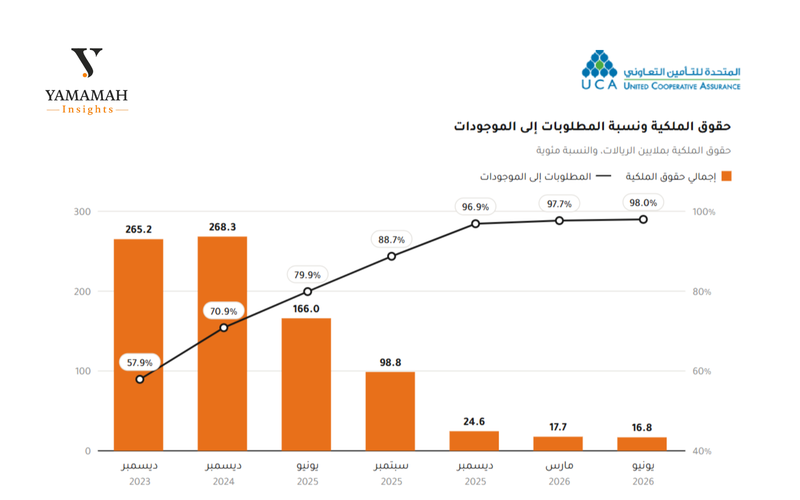
The ruling to commence liquidation proceedings against United Cooperative Insurance illustrates how financial distress at insurance companies becomes visible on the balance sheet long before a case reaches court. The company’s liabilities grew 124% from the end of 2023, compared with 32% growth in its assets, leaving equity to cover just 2% of assets. Accumulated losses reached 115% of capital by the end of June 2026.
As for its operations, written premiums fell 98.5% in the second quarter of 2026 after the Insurance Authority halted new policy issuance due to the company’s breach of regulatory instructions. This means the continuation of operations depends on both correcting those violations and strengthening the company’s capital.
In our view, the ruling is consistent with what the financial statements show, and little, if anything, is likely to remain for shareholders after creditors are paid. The next steps are expected to depend on the liquidator’s report on asset values and debts, as well as the outcome of any appeal to the Court of Appeal.

Comments (4)
No comments yet. Be the first to comment!