

BinDawood Holding announced on August 16, 2026 that its wholly owned subsidiary, "Just & Joben OÜ", had been awarded the bid to purchase the assets of a dairy-products manufacturing plant in the Republic of Estonia for €135.25 million.
The potential deal gives BinDawood broader access to food production and manufacturing, as it includes existing production assets with an estimated share of approximately 15% of Estonia’s cheese market. The capacity of its plant in the Estonian city of Paide to process milk stands at 1,100 tons per day.
Through the deal, the company aims to diversify its business and revenue sources and strengthen the resilience of its supply chains and sourcing channels, supporting the Kingdom’s plans to enhance food security. It also expects the transaction to have a positive financial impact over the medium and long term, subject to the completion of the necessary procedures and regulatory approvals.
Between expanding beyond retail, diversifying revenue sources, and strengthening supply chains, the deal opens up several perspectives on its potential impact on the future of BinDawood’s business.
Al-Yamamah University students, along with several analysts, discussed the deal’s dimensions and its potential implications for the company as follows:
Diversifying Revenue Sources and Managing Financing Risks
Colleague "Abeer Altuwaijri" @AbeerAltuwaijri provided a financial analysis, saying: "In my view, BinDawood’s acquisition is a good step toward diversifying revenue sources and reducing reliance on retail alone, particularly as the company enters food manufacturing.
However, the success of the deal will depend heavily on the company’s ability to manage the financing, integrate the acquisition into its operations, and turn it into actual revenue growth and improved margins in the coming years."
Strategic Integration and Efficient Use of Financing Facilities
Student "Jumana Alshehri" @Jumana Alshehri added her perspective on the deal, saying: "I see the deal as a strategic step for BinDawood because it is not limited to expanding beyond the Kingdom; it also takes the company into food manufacturing, which will help diversify revenue, strengthen supply chains, and reduce reliance on retail alone.
As for financing it through financial facilities, I believe that is appropriate if the plant’s expected returns exceed the cost of financing, particularly given the expected positive financial impact over the medium and long term. The acquisition could also open up new markets and growth opportunities for the company.
Overall, the success of the deal will depend on BinDawood’s ability to manage and efficiently integrate the plant and turn it into actual revenue and profitability growth."
Position in the Value Chain and Utilization of Production Capacity
Student @شهد المحيسن joined the discussion with an operational analysis, saying: "In my view, the deal is a positive step for BinDawood, particularly because it is not limited to geographic expansion; it gives the company a stronger presence across the value chain by entering food manufacturing. This could help diversify revenue and reduce its reliance on the retail sector alone.
Ultimately, however, the deal’s success will depend on the company’s ability to operate the plant efficiently and achieve healthy profit margins, especially since it is being financed through financial facilities.
If BinDawood can capitalize on the production capacity and connect it to its existing sales channels, the acquisition could have a clear positive impact on growth and profitability over the medium and long term."
Acquiring Existing Assets and Expanding Sales Channels
Student "Ghadah Alwallan" @Ghadah Alwallan highlighted the deal’s operational value, saying: "What stands out to me is that BinDawood is not entering manufacturing from scratch; it is acquiring an existing asset with a market share and substantial production capacity.
Therefore, I believe the value of the deal will depend on the company’s ability to make use of this capacity and expand the sales channels for the plant’s products, because increasing sales from the same asset may be more important than simply owning it."
Managing International Expansion and the Risks of Different Markets
Student "Rimas Almashali" @Rimas Almashali added in the same context: "I believe the challenge in this deal is not only the plant’s financial performance, but also BinDawood’s ability to manage a business in a market that differs from Saudi Arabia in terms of demand, costs, and competition.
BinDawood’s experience in Estonia could therefore be an important test of its ability to manage international investments, particularly if it plans further overseas expansion in the future."
Cash Flows and Servicing Financing Debt
Student "Mohammad Alghaihab" @Mohammad Alghaihab commented from an investment and financial perspective, saying: "In my view, BinDawood’s move into food manufacturing is a good step toward diversifying its business rather than relying primarily on retail. It could give the company greater control over part of the supply chain and open up new revenue sources and markets. Owning an existing production asset may also enable faster expansion than building the business from scratch.
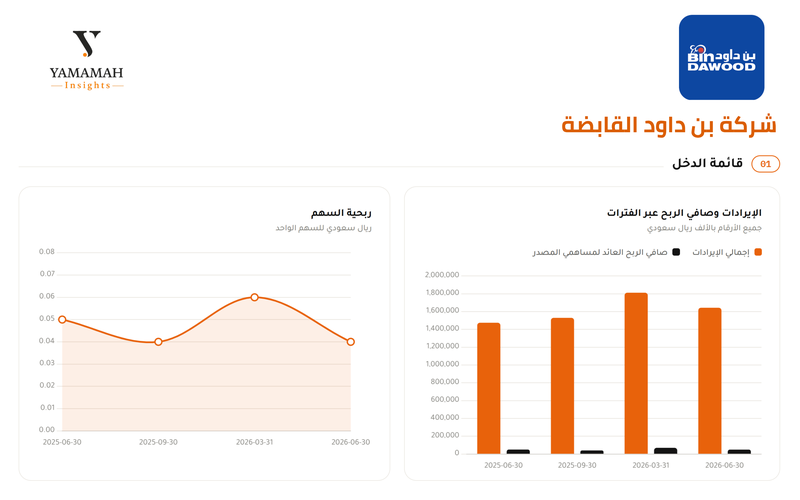
However, the deal’s success will depend heavily on the returns generated by the plant compared with the acquisition and financing costs. Since the transaction is financed through financial facilities, the key issue going forward will be monitoring its ability to generate sufficient cash flows and service the debt, as well as how successfully BinDawood integrates the new business and turns the expansion into actual, sustainable earnings growth rather than merely growth in assets and revenue."
Financial Discipline and Liquidity and Leverage Pressure
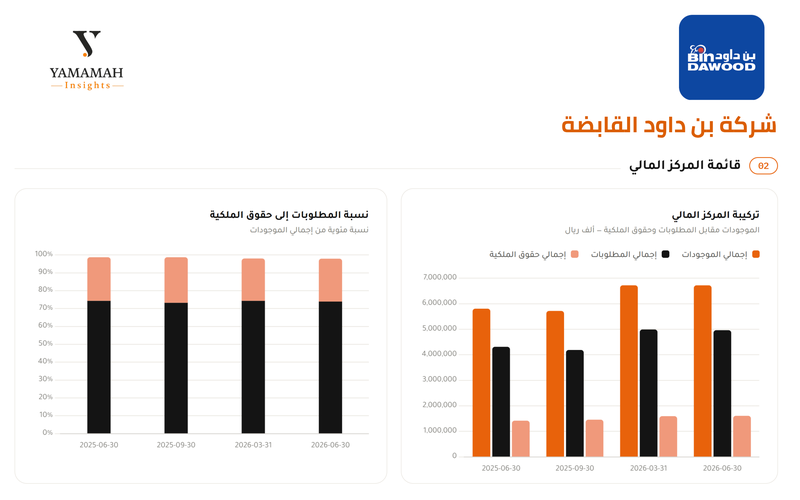
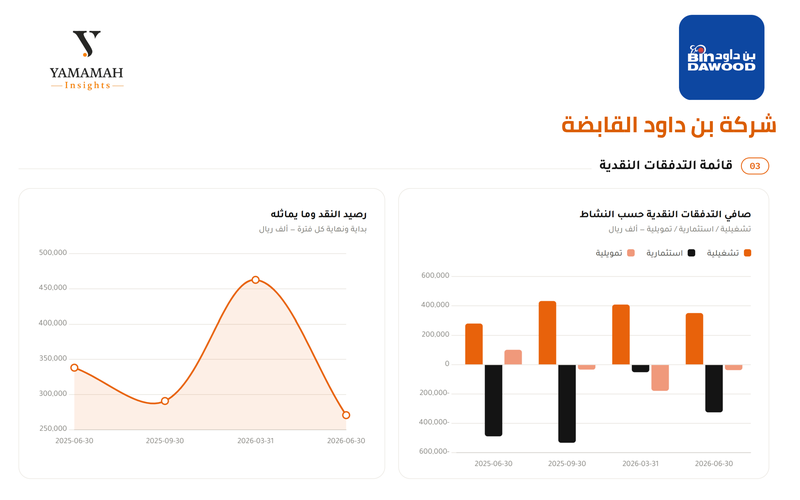
Student "Rana Alshamrani" @Rana Alshamrani analyzed the structural liquidity risks, saying: "In my view, the real challenge is not only the success of operational integration, but also financial discipline during the acquisition period. BinDawood has repeatedly reported negative investing cash flows alongside lower operating cash flows, and with the deal financed through financial facilities, any delay in realizing returns from the plant could increase pressure on liquidity and leverage. The success of the deal therefore depends on the company’s ability to balance expansion with maintaining the flexibility of its financial position."
Asset Purchase Structure and Capital Allocation Constraints
In an analytical review of the company’s performance, financial and economic analyst "Hamad Alsaeed" @Hamad Alsaeed explains: BinDawood Holding’s acquisition of the assets of the Paide and Põltsamaa plants belonging to ESE Biome Tootmine is not an acquisition of equity in an existing company; rather, it is an asset purchase through the bankruptcy administrator in an auction that opened at €80 million and closed at €135 million, equivalent to the announced transaction value of SAR 585.85 million. This distinction is important because it effectively separates BinDawood from the parent company’s obligations to its creditors and suppliers.
Economically, this move represents a logical integration for a group that derives 90% of its revenue from retail, as it converts the cost of dairy inputs from a variable operating expense into a wholly owned production asset that helps control gross profit margins.
From a capital-allocation perspective, the deal alone consumes between 46% and 61% of the announced acquisition budget of SAR 1.5–2 billion over three years. This follows three acquisitions made last year and this year—"Mathalath Al-Al‘ab," "Faza Food," and the UAE-based "Nader Bakery"—for AED 114.8 million, narrowing the room for maneuver on nearby potential deals.
Regarding the auction, closing at a premium of approximately 69% over the opening price reflects genuine competition for an asset that still generated €152.7 million in revenue in 2024 and exports more than 90% of its production. This suggests that the parent company’s difficulties were financial rather than operational. The actual risk therefore lies in the ability of a management team whose expertise is primarily in running stores to transform a complex European industrial asset into a genuinely profitable unit and ensure that it does not become merely another line item on the fixed-asset register.

Comments (6)
No comments yet. Be the first to comment!