
Developments surrounding the sukuk issued by Ruwasi Al-Binaa Investment Company (First Issuance Series) escalated after the company announced that it could not distribute the periodic returns due for the period from March 10, 2026, to September 10, 2026, citing cash-flow pressures and existing financial obligations. The company said the suspension was part of a financial restructuring plan that includes rescheduling debt and strengthening cash flows to support business continuity.
Meanwhile, Alkhair Capital Saudi Arabia, in its capacity as sukukholders’ agent, invited sukuk holders to a meeting via digital platforms to discuss and vote on the available legal options and developments relating to the distribution amount. In this context, students from Al Yamamah University offered their analyses of the implications of the default and its impact on debt and investment instruments, as outlined below:
Liquidity Crisis Challenges and Measures to Restore Confidence
Student Ghada Alsarheed @Ghada Alsarheed explained that Ruwasi Al-Binaa Investment Company, founded in 2008 with capital of SAR 55 million and listed on the Nomu market in 2022, is facing a severe financial and structural crisis. It began with the announcement that the company could not distribute returns on its sukuk due to a liquidity crisis, coinciding with suspended share dividends and delayed financial statements. She added: “This crisis is a blow to investor confidence and highlights a gap in corporate communications and crisis management. The problem has gone beyond the numbers to affect the company’s financial reputation. The main challenge for the company and its sukuk agent, Alkhair Capital, is to manage expectations and restore credibility through two tracks: the first is financial and procedural, involving restructuring obligations, reaching a flexible settlement, and making prompt disclosures; the second focuses on crisis communications and rebuilding investor confidence.”
The Double Default and the Importance of Independent Credit Analysis
Student Ryouf Alsewailim @Ryouf Alsewailim affirmed that recent developments clearly reflect a crisis in liquidity management and governance, identifying three main dimensions: “First, the double default on sukuk returns and share dividends, together with the delay in financial statements, undermines the market’s confidence in the quality of the company’s financial planning. Second, this development confirms that sukuk, as debt instruments, are tied to the issuer’s solvency and are not an absolute guarantee, making independent credit analysis essential for every investor. Third, Alkhair Capital’s actions underscore the importance of governance and an independent agent in making decisive decisions that protect holders’ rights and clarify repayment options.”
Financial Forecasting and the Role of Transparency and Oversight
Student Meshail Alanazi @Meshail ALANazi believes that effective financial management and governance are essential to forecasting liquidity crises and meeting obligations on time. She continued: “The company’s failure to pay sukuk returns, along with delayed financial statements and dividend distributions, could weaken investor confidence and underscores the importance of analyzing each company’s solvency and credit risks before investing. An independent agent for sukuk holders, together with compliance with Capital Market Authority regulations and stronger disclosure and transparency, helps protect investors’ rights and mitigate risks.”
The Need to Assess a Company’s Financial Position Before Investing
Student Rahaf Alanazi @Rahaf Alanazi highlighted the importance of investment awareness, saying: “Investors should carefully assess a company’s financial position before buying its sukuk, because debt instruments carry different levels of risk. Most importantly, they should verify the company’s actual ability to repay and the stability of its finances before making any investment decision.”
Effective Cash-Flow Management and Meeting Obligations
Student Rabiah Almugait @Rabiah Almugait explained that the crisis highlights the effectiveness of financial management in monitoring cash flows and planning for obligations before they fall due. She said: “The delay in paying sukuk returns, alongside suspended dividend distributions and delayed financial statements, negatively affects investor confidence. It is essential to assess each company’s financial position and credit risks before subscribing, as sukuk are not risk-free. Although clear disclosure and an independent agent improve transparency and protect rights, restoring confidence depends on the company’s actual ability to address its crisis and meet its obligations.”
Assessing Solvency and Debt Levels
Student Nada Asiri @nada Asiri noted that recent developments underscore the importance of effective liquidity and cash-flow management, adding: “The failure to pay sukuk returns and distribute dividends points to financial pressures that directly affect investor confidence. Assessing solvency and debt levels, as well as compliance with financial disclosure requirements, is therefore essential to reducing risks and strengthening financial stability.”
Assessing Sukuk Safety and High Returns
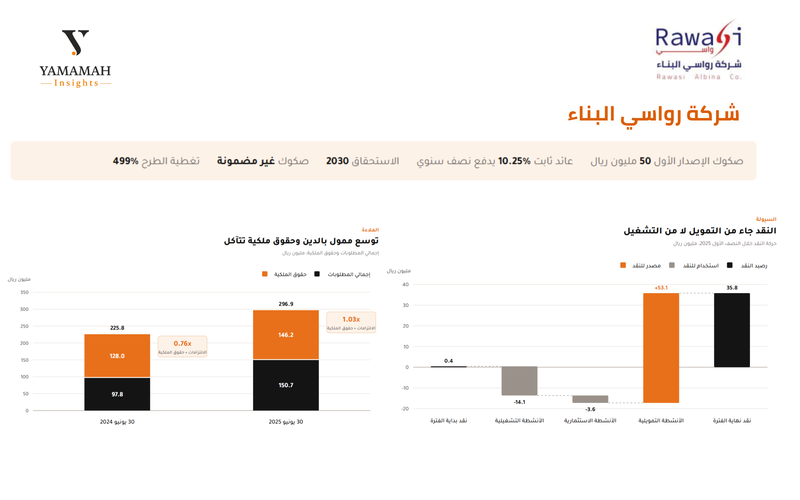
Student Albatool Bedairi @Albatool Bedairi pointed out that a common mistake is to consider sukuk a safe investment simply because they are debt instruments that provide periodic returns. She added: “Each issuance carries risks that vary according to the issuing company’s financial position, the sukuk terms, and the guarantees available. Investors should therefore review cash flows, debt ratios, and the company’s ability to cover its obligations, rather than focusing only on the advertised return. In Ruwasi Al-Binaa’s case, the annual return of 10.25% illustrates the importance of assessing the accompanying risks: a higher return does not guarantee the ability to repay.”
Governance and the Risk Premium in Debt Instruments
Student Zaid Darweesh@Zaid Darweesh examined the crisis from the perspective of governance and financial analysis, highlighting five points: “First, management’s ability to anticipate liquidity crises is at the heart of governance; without financial planning, challenges can turn into structural crises. Second, the payment default coinciding with the absence of financial statements damages investor confidence and sharply raises the company’s risk premium. Third, debt instruments are not inherently safe, and creditworthiness and cash-flow analysis are essential before subscribing. Fourth, the Capital Market Authority’s strict regulations act as an early-warning system to ensure fair pricing. Fifth, the sukukholders’ agent serves as a safeguard, unifying creditors’ efforts and managing negotiations to protect their rights.”
The Importance of Sound Liquidity Planning and Monitoring Rights
Student Dina Alarjani @Dina Alarjani said the company’s failure to pay sukuk returns and its delayed financial statements undermine investor confidence, explaining: “This crisis highlights the importance of sound liquidity planning and clear disclosure. Investors should assess a company’s financial position before buying, because sukuk are not risk-free. An independent agent for sukuk holders can help monitor their rights and communicate with the company in an organized manner.”
The Importance of Disclosure and Oversight in Protecting Investors
Student Raneem Asiri @Raneem Asiri believes that companies need strong financial management to address crises and avoid liquidity problems. She added: “Ruwasi Al-Binaa’s default could affect its reputation and investor confidence, particularly given the delay in disclosing its financial results. Financial information must be made available clearly and on time, and investors must assess the risks. Ongoing oversight by the Capital Market Authority and the presence of an independent agent also help reduce problems and protect investors’ rights.”
Disclosure Timing and Transparency Management to Prevent Surprises
Student Dana Al-Sadoun@Dana Al-Sadoun drew attention to a crucial aspect concerning the timing of disclosures and how the crisis is managed, saying: “The delayed publication of first-half financial statements, followed by the announcement that returns could not be paid, creates uncertainty for investors. Genuine governance is not limited to formal compliance; it requires early and continuous disclosure as soon as a liquidity gap is anticipated. A company’s investment value depends fundamentally on transparency and setting realistic expectations for the market to prevent confusion.”
Executive Management Effectiveness and Realistic Reporting
Student Fahad Alruwaished @Fahad Alruwaished believes that the effectiveness of executive management and the board of directors is fundamental to accurately managing cash flows and anticipating liquidity crises early, thereby safeguarding the company’s financial stability. He added: “Ruwasi Al-Binaa’s failure to pay sukuk returns, coinciding with suspended dividend distributions and delayed publication of its financial statements, deals a severe blow to investor confidence in financial statements and disclosures. It also heightens market concerns about the transparency and realism of the company’s reports, calling for tighter oversight and more professional financial management to restore confidence.”
Transparency and the Role of the Capital Market Authority and Sukuk Agent
Student Noof Alanazi @Noof Alanazi explained that effective management is essential to anticipating liquidity crises and managing obligations before they fall due. She said: “The company’s default and delayed financial statements undermine investor confidence and underscore the importance of transparency and timely disclosure. Each company’s solvency and credit risks should therefore be assessed, as sukuk are not risk-free. The Capital Market Authority and the independent sukukholders’ agent help strengthen oversight, protect investors’ rights, and ensure fair and transparent dealings.”
The Gap Between Accounting Revenue and Cash Liquidity
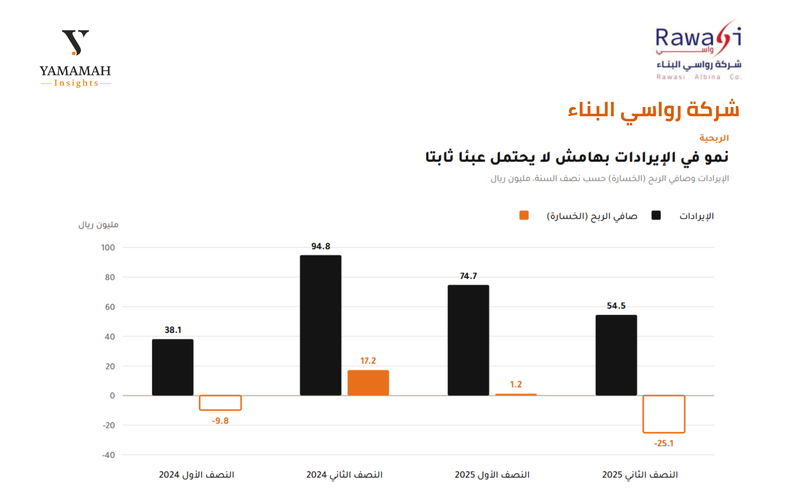
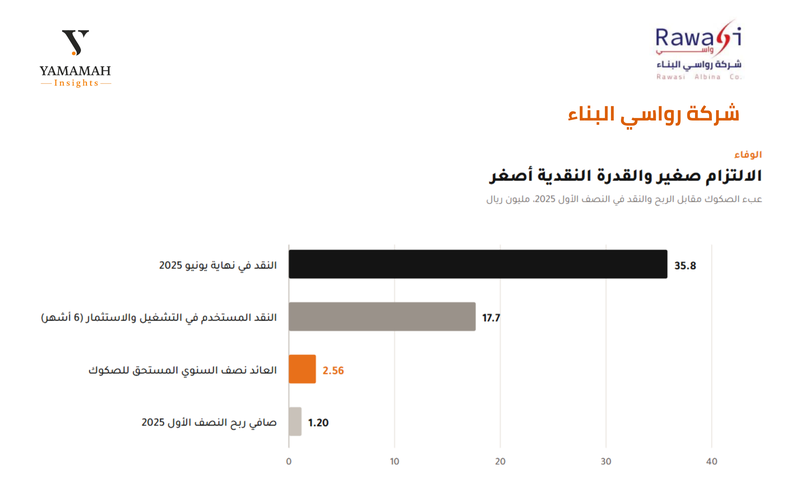
Student Yazan Hamoud @Yazan Hamoud analyzed the company’s financial figures, explaining: “Ruwasi Al-Binaa’s problem goes beyond merely delaying sukuk payments, as the figures point to earlier financial pressures. In the first half of 2025, the company recorded revenue of SAR 74.7 million but net profit of only SAR 1.2 million, while operating cash flow was negative by around SAR 14.1 million and financing cash flow reached SAR 53.1 million. This highlights the difference between generating revenue and generating cash. The sukuk’s high return of 10.25% must be weighed against the risks. The solution is not limited to rescheduling debt; it also requires reviewing cash flows and collecting receivables. The most important question is: how can the company regain its ability to generate cash from its core business instead of relying on external financing?”
Lessons Learned and Debt-Instrument Governance
Student Zikra Abdulkareem @Zikra Abdulkareem explained that the key lesson from the Ruwasi Al-Binaa case is that investing in debt instruments does not mean they are risk-free. She continued: “The effectiveness of management and the board in monitoring cash flows is essential to protecting the company and investors from liquidity crises. The default coinciding with delayed financial statements affects investor confidence, because regular disclosure is fundamental to investment decisions. An independent agent for sukuk holders is also an important element of debt governance, organizing the relationship between the company and holders within the applicable legal framework and with a high degree of transparency.”
Governance Failures and the Absence of Financial Disclosure
Student Shahad Alkhamis @Shahad Alkhamis highlighted aspects of the management failure, saying: “Effective management and the board are the foundation of cash-flow management. Releasing a mortgage lien, cancelling a promissory note, and then launching a financial investigation indicate that governance had failed before the problem surfaced as a liquidity crisis. The double default, coupled with the absence of financial statements, creates a crisis of confidence: the problem is not simply nonpayment, but investors’ inability to assess the situation because disclosures are missing. Credit risk assessment is essential, as corporate sukuk are not inherently safe. The Capital Market Authority’s disclosure directives are a positive step, but they require swift implementation and enforcement. The sukuk agent, meanwhile, must have effective tools to represent holders.”
Liquidity Management Effectiveness and the Impact of Sharia Compliance
Student @عمر الشيخ explained that a company’s success depends not only on making profits but also on effective liquidity management and meeting obligations on time. He added: “Effective financial planning helps identify default risks early, and a default coinciding with delayed financial statements weakens investor confidence because they lack the information needed to assess the situation. Investors should assess solvency while recognizing that an investment instrument’s compliance with Sharia principles does not mean it is free of financial risks. Building confidence requires responsible management, reliable disclosure, and effective oversight.”
The Timing of Distributions and Their Relationship to Debt Obligations
Student Faiz Alhaj @Faiz Alhaj analyzed the timeline of the crisis, saying: “In May, a cash dividend distribution to shareholders was announced. In September, the financial statements were delayed, and then the sukuk return fell due but was not paid. This raises the question: why are shareholders prioritized over creditors when sukuk represent a specific contractual obligation? Management should have tested its ability to pay and monitored liquidity pressures before announcing distributions. Investors can draw a practical lesson: they should investigate the source of the cash that will be used to pay returns, not just the rate of return. The Capital Market Authority should enforce publication deadlines and link cash distributions to outstanding obligations. An independent agent such as Alkhair Capital can also unify creditors’ efforts and lend collective legitimacy to the decisions made at the November 12 meeting.”
The Importance of Oversight and Financial Awareness
Student Fay Aldossari @Fay Aldossari affirmed that the key lesson for investors is that no debt instrument is entirely safe. She added: “The sukuk default and delayed financial statements have shown that credit analysis of solvency and liquidity is the first step before subscribing. Management effectiveness is demonstrated by its ability to anticipate liquidity crises before they occur, while activating the legal framework through an independent agent safeguards creditors’ rights. Although oversight and strict regulations are the primary protections, investors’ financial awareness remains the first line of defense.”
Proactive Cash-Flow Planning
Student @أناغي عطرجي believes that effective executive management and a capable board are essential to companies’ stability and sustainability. She noted: “Sound financial planning helps manage cash flows and anticipate crises before they occur, enabling a company to meet its obligations on time, maintain investor confidence, and support financial stability.”
Transparency and Independent Risk Assessment
Student Rand Alkhalaf @Rand Alkhalaf noted that effective management and cash-flow planning are essential to avoiding default. She continued: “Sukuk defaults and delayed financial statements may weaken investor confidence, so each company’s risks must be assessed independently. Capital Market Authority regulations and the presence of an independent sukuk agent help enhance transparency and protect investors’ rights.”
Requirements for Restoring Confidence and Responsible Management
Student Jana Alshahrani @Jana Alshahrani explained that the crisis at Ruwasi Al-Binaa Investment Company highlights the importance of effective financial management and planning to monitor cash flows and anticipate liquidity crises. She said: “Delayed payments of returns and shareholder dividends, along with delayed financial statements, undermine investor confidence and raise questions about transparency. High sukuk returns do not make them a safe investment, so solvency and risks must be assessed. Disclosure regulations and an independent agent help protect rights. Restoring confidence depends not only on repayment but also on improving financial management and maintaining regular disclosure.”
The Quality of Liquidity Management and the Reality of Cash Profits
Student Thanaa Alshayib @Thanaa Alshayib believes the Ruwasi case illustrates a fundamental point: making a profit does not necessarily mean having the cash available to meet obligations. She continued: “This is where management and the board play a key role in liquidity planning and early disclosure. What heightens investors’ concerns is that overdue payments coincide with delayed financial statements, obscuring the company’s full financial picture. Sukuk are not guarantees in themselves. Effective oversight and an independent agent are demonstrated through clear procedures and the protection of rights, because confidence is built on a company’s transparency when it defaults—not on its promises when investors subscribe.”
Between Mortgage Risks and Voting Challenges
In an analytical review, financial and economic analyst Hamad Alsaeed @Hamad Alsaeed added: “The Ruwasi Al-Binaa case shows that the risks of sukuk issued by mid-sized companies should be measured by governance and guarantees, not by the amount of the unpaid return, which stands at SAR 2.6 million. The sukuk were issued with a 10.25% return—nearly double that of low-risk instruments—even though they carried a local rating of BBB. Before the offering, the company had announced its intention to use part of the proceeds to repay bank loans, thereby shifting risk from banks to around 16,000 subscribers in unsecured sukuk.”
The company’s lawsuit refers to a decision made on September 6, four days before the return payment was due, to release real estate mortgages and cancel a promissory note worth SAR 65 million that had been in the company’s favor—more than the entire value of the issuance. The new board’s decision to take legal action gives sukuk holders an important negotiating tool.
Amending the sukuk’s key terms as part of any restructuring would require holders representing 66.6% to attend and 75% of votes to approve, thresholds that are difficult to meet given the large, dispersed subscriber base. The November meeting will therefore test how effectively the framework for publicly offered sukuk protects holders, and its outcome will affect the pricing of comparable issuances.
 Ask Yamami
Comments (6)
No comments yet. Be the first to comment!