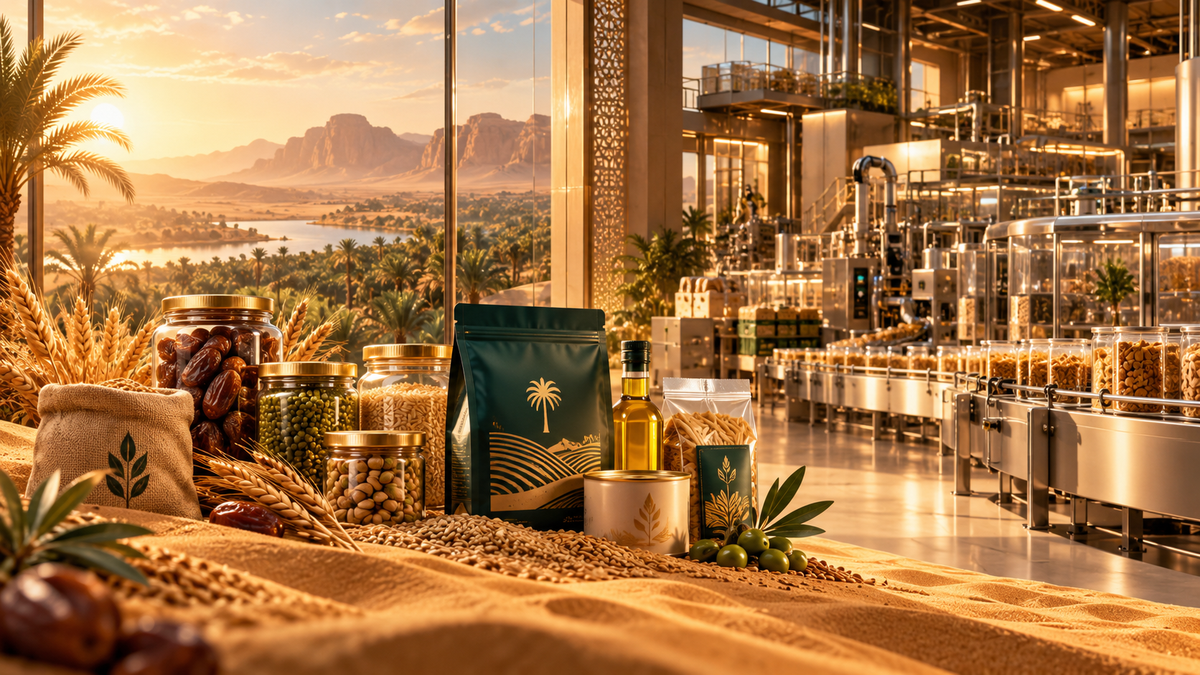


Saudi Arabia’s food sector has undergone a remarkable transformation over the past decades. The focus has shifted from trying to achieve complete agricultural self-sufficiency in a desert environment to building an integrated food industry based on manufacturing, value-added products, and smart supply chains.
Key figures and areas of transformation in the food system:
- Sector size: Saudi Arabia’s food industry is currently estimated to be worth around SAR 200 billion. It includes more than 1,900 factories and cumulative investments exceeding SAR 110 billion in food products and SAR 26.8 billion in beverages, alongside food exports that reached SAR 15 billion in 2025.
Pillars of the modern model:
- Selective production: Focus on producing goods in which the Kingdom has a competitive advantage, such as dairy products—which have achieved 129% self-sufficiency—as well as eggs and dates. Regulate and limit the cultivation of water-intensive crops, such as wheat and fodder, in line with approved quotas.
- Local manufacturing: Transform raw materials into high-value-added products through modern production and distribution lines, with the aim of localizing 85% of food industries and developing new industrial clusters.
- Global supply: Secure the Kingdom’s needs for grains, oils, and sugar through direct imports and targeted overseas agricultural investment led by SALIC.
A question to consider:
Can Saudi Arabia turn the imperative of food security into export and industrial strength that reshapes the Middle Eastern dinner table in the decades ahead?
---
Disclaimer:
The information and analysis in this material are intended for general awareness and informational purposes only. They do not constitute direct investment, financial, or legal advice or guidance.

Comments (7)
No comments yet. Be the first to comment!