
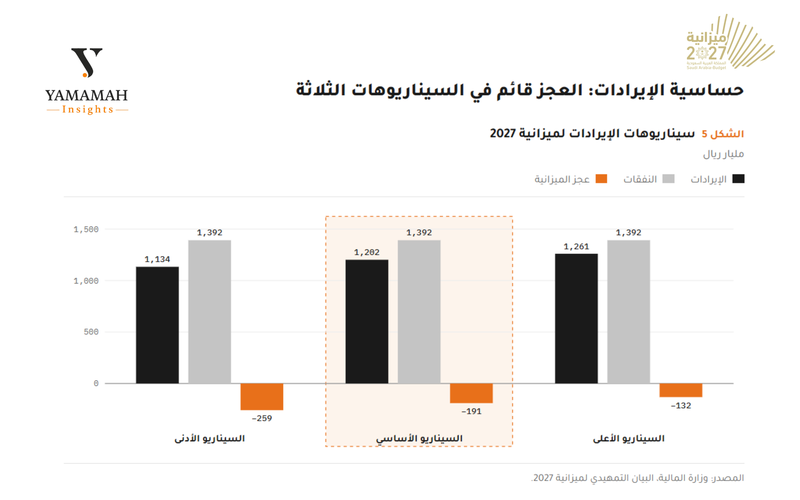
On September 30, 2026, the Ministry of Finance announced the preliminary statement for the 1448/1449 AH (2027) state budget. It estimated total spending at SAR 1,392 billion and revenues at SAR 1,202 billion, with a controlled fiscal deficit of around 3.6% of GDP. The figures reflect a flexible fiscal policy and long-term planning that balances the completion of major development projects and Saudi Vision 2030 with maintaining fiscal sustainability and the Kingdom’s strong financial position.
The budget figures reflect the depth of economic and structural transformation. Forecasts show a historic rise in revenues to SAR 1,351 billion by 2029, while non-oil activities accounted for a record 57.3% of GDP in the first half of 2026. This limited the impact of declining oil activity and global geopolitical tensions, and helped keep inflation stable at 2.1% and reduce unemployment among Saudis to 6.5%. The statement also noted the government’s intention to continue financing the development deficit through diverse debt instruments (sukuk, bonds, and alternative financing) to protect strategic reserves.
Al Yamamah University students discussed the implications of these figures, financing priorities, and sustainable economic growth as follows:
Diversifying instruments and managing the deficit flexibly
Student “Nouf Alajian”@Nouf Alojayan opened the analysis, saying: “I believe that diversifying financing tools through bonds, sukuk, and alternative financing gives the government greater flexibility to manage the deficit and fund development projects without relying excessively on reserves.
But the most important thing is directing this funding to projects with sustainable economic returns, while keeping debt at levels that can be managed over the long term.”
Sustaining the non-oil sector and creating jobs
Student “Rahaf Alanzi” @Rahaf Alanazioutlined the development implications, saying: “I believe that focusing on the non-oil economy is an important step for the future because it reduces the impact of energy price changes on public finances. By managing debt and deficits, development spending on projects and various sectors can continue, helping to support growth and create new jobs.
Diversifying revenue sources also gives the economy a greater ability to cope with global challenges and volatility.”
Distinguishing real growth from nominal growth
Student “Meshael Alanzi”@Meshail ALANazi analyzed economic indicators, saying: “In my view, a decline in real GDP alongside growth in nominal GDP reflects the effects of inflation and price changes. Real GDP therefore gives a more accurate picture of actual economic growth, while nominal GDP reflects value at current prices.
The ongoing deficit can be managed by diversifying financing tools in a balanced way, while maintaining debt sustainability and protecting reserves.
Growth in non-oil revenues is also very important because it reduces reliance on oil. Finally, continued development spending on education and training provides a buffer against unemployment.”
Social gains and quality of life
Student “Rabiah Almuqait”@Rabiah Almugait commented on the social impact of spending, saying: “If global challenges and geopolitical tensions persist, I believe development spending can be sustained by focusing on projects and sectors with lasting impact, in line with the goals of Saudi Vision 2030.
Supporting the non-oil sector and creating jobs not only preserves gains such as lower unemployment, but also directly improves quality of life by developing services and infrastructure and expanding opportunities for citizens.”
Stable indicators and securing financing
Student “Jumanah Alshahri”@Jumana Alshehri shared her analysis of fiscal policy, saying: “I believe the figures reflect relative economic stability, especially with non-oil sector growth, lower unemployment, and stable inflation.
With the deficit continuing, diversifying financing sources, such as bonds and sukuk, helps fund development projects without relying heavily on reserves.
Strong non-oil revenues are also important because they reduce the budget’s exposure to oil price fluctuations. Continued development spending helps support growth and create jobs.”
Economic resilience and spending efficiency
Student “Yazan Hamoud”@Yazan Hamoud explained the implications of fiscal reliance, saying: “I believe growth in non-oil activities and their 57.3% contribution give public finances greater resilience to oil fluctuations, as a larger share of economic activity now depends on different sectors.
But that doesn’t mean oil’s impact has ended. The priority is to keep diversifying revenues and improve spending efficiency, so that falling oil prices or production volumes do not significantly affect projects and economic growth.”
What real output and purchasing power reveal
Student “Albatool Bedairi”@Albatool Bedairi highlighted how to interpret the figures, saying: “Nominal GDP can grow while real GDP declines because nominal GDP is affected by price changes, while real GDP removes the effect of prices and measures changes in actual output.
In the 2026 estimates, real GDP fell by 3.6%, mainly due to a 21.8% decline in oil activities, while non-oil activities continued to grow. Real GDP is therefore more informative when assessing actual economic activity. But to understand people’s living standards, we also need to consider inflation, income, and purchasing power.”
Historic growth in non-oil revenues
Student “Ahmed Aljadaan”@AHMED ALJADAAN discussed the long-term targets, saying: “Beyond oil price fluctuations, the figure worth noting is the forecast for revenues to reach SAR 1,351 billion in 2029—a historic leap from SAR 166 billion in 2015.
This figure helps explain how the economy maintained low inflation (2.1%) and kept projects going despite global geopolitical tensions.
Our economy is literally shifting from reliance on a barrel of oil to productivity and local content.”
The development deficit as an economic safety net
Student “Fay Al-Dosari”@Fay Aldossari stressed the importance of sustaining investment drivers, saying: “Real GDP is down because oil production has been cut, but growth in non-oil activities is the true measure of our living standards because it reflects market activity and actual job opportunities.
The 3.6% deficit is a carefully managed deficit: the government has chosen to finance projects through sukuk and bonds without drawing on strategic reserves.
The surge in non-oil revenues is also the real safety net that protects essential services, while continued funding serves as a key driver for the private sector to create jobs.”
Directing funds and monitoring fiscal impact
Student “Dina Alarjani”@Dina Alarjani commented on the expected returns from debt, saying: “In my view, the statement shows that the economy is making progress in diversifying its income sources. This is important because it reduces reliance on oil and gives public finances greater flexibility.
I think a deficit isn’t necessarily a bad thing if the funding goes to development projects that benefit the economy and create jobs.
But it remains important to monitor the long-term impact of deficits and debt and make sure spending delivers real results for citizens and businesses.”
Promising sectors and economic readiness
Student “Zikra Abdulkarim”@Zikra Abdulkareem outlined strategic investment priorities, saying: “In my view, diversifying revenue sources and strengthening non-oil activities are essential to the sustainability of the Saudi economy, especially amid oil market volatility.
Continued development spending and investment in technology and promising sectors help support growth and create jobs, while strengthening the economy’s resilience to global challenges.”
Balancing development with fiscal sustainability
Student “Lujain Al-Qurashi”@Lujain Algorashi reviewed the statement’s broader themes, saying: “Real GDP can decline while nominal GDP grows because of price effects, but real GDP gives a clearer picture of actual economic growth.
Diversifying financing tools helps keep projects going while protecting reserves and maintaining debt sustainability. Growth in non-oil revenues also reduces reliance on oil. Continued development spending is key to reducing unemployment to 6.5%.
Overall, the challenge is to balance development, income diversification, spending efficiency, and fiscal sustainability.”
Productive borrowing and inflation limits
Student @Thanaa Alshayeb shared her view on financing quality, saying: “I believe the key issue isn’t the size of the deficit itself, but how the resulting financing is used. If borrowing is directed to projects that raise productivity, create jobs, and increase future revenues, it can be a tool for growth rather than just a financial burden.
The non-oil sector’s 57.3% contribution is striking and gives the economy greater resilience. The real challenge is sustaining this growth while maintaining debt sustainability and keeping inflation in check.”
Protecting reserves and ensuring fiscal flexibility
Student “Ryouf Al-Suwailim”@Ryouf Alsewailim explained the importance of proactive policies, saying: “In my view, the statement shows the economy’s resilience and sound fiscal management. A decline in real GDP is natural given the drop in oil activities, but the key is continued growth in non-oil activities and support for the domestic market.
A deficit isn’t a problem as long as its financing goes to development projects with sustainable returns. Diverse financing tools ensure strategic reserves are protected from depletion.”
Improving spending efficiency and maintaining balance
Student “Nada Asiri”@nada Asiri highlighted the challenges ahead, saying: “In my view, the main challenges in the 2027 budget are balancing continued development spending with maintaining financial stability, especially amid oil market volatility and global economic challenges.
This underscores the importance of diversifying revenue sources and strengthening non-oil revenues, alongside improving spending efficiency to ensure development projects are sustainable and long-term unemployment reduction targets are met.”
Alternative financing and preserving gains
Student “Fahad Alruwaished”@Fahad Alruwaished commented on the deficit management strategy, saying: “The 3.6% decline in real GDP was due to lower oil activity and reduced production, while the rise in nominal GDP was linked to prices and inflation of 2.1%. Non-oil activity growth of 3.2% remains the closest measure of people’s living standards and business performance.
The estimated 3.6% deficit for 2027 will be covered through sukuk, bonds, and alternative financing. This is an excellent strategic move that ensures development projects continue without drawing on state reserves.”
Measures of transformation and a buffer for growth
Student “Zaid Darweesh”@Zaid Darweesh concluded the fiscal analysis with a strategic summary, saying: “The decline in real GDP simply reflects voluntary cuts to oil production, while growth in non-oil activities is the tangible indicator of what is happening on the ground.
The 3.6% deficit is a carefully managed development deficit, financed through bonds and alternative funding to protect reserves. Non-oil activities have also become a financial safety valve that reduces our exposure to energy market fluctuations. Continued investment in infrastructure is a buffer against global tensions, keeping the private sector active and preserving the gains that brought unemployment down to 6.5%.”
Sustainability and economic transformation
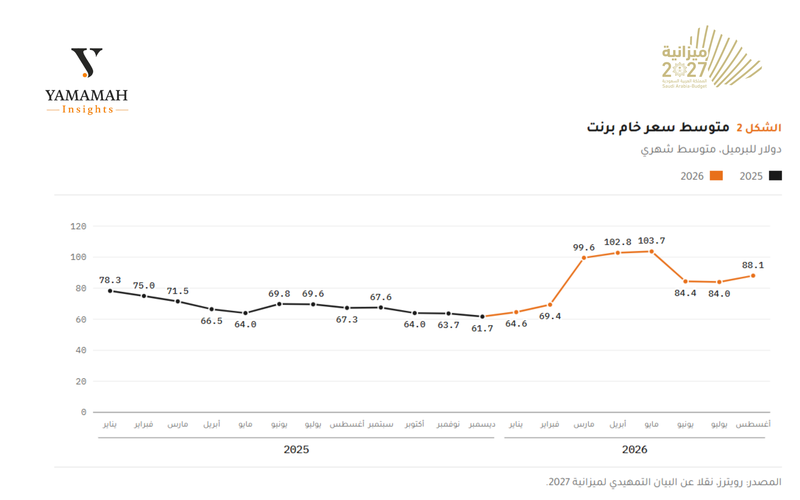
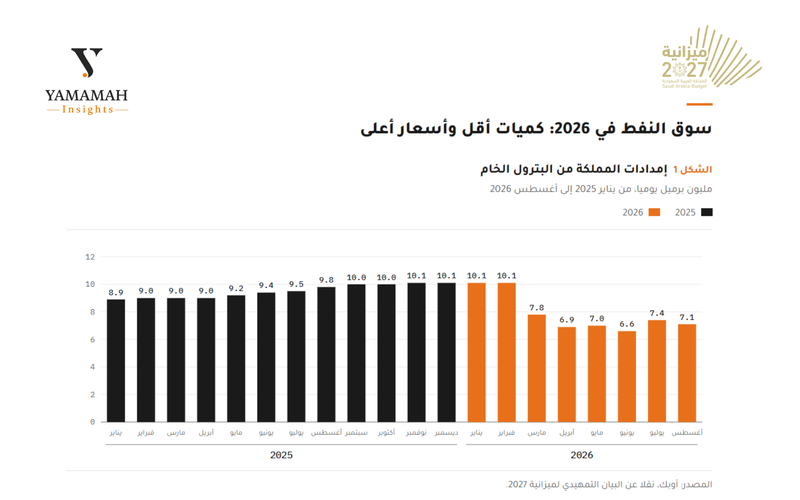
In an analysis, financial and economic analyst “Hamad Alsaeed” @Hamad Alsaeedadds: The preliminary 2027 budget statement’s key insight is that the oil shock did not reach revenues. Supplies fell by about 14% over eight months, yet projected 2026 revenues exceeded the approved budget by SAR 43 billion, as higher prices offset lower volumes.
Against this backdrop, the estimated 12.8% growth in 2027 can be read as a return to trend after an exceptional year. Average growth over the two years is about 4.3% annually, close to the 4.6% growth recorded in 2025.
The estimated deficit of SAR 191 billion, or 3.6% of GDP, is a deliberate fiscal decision, as it appears in all three revenue scenarios. The government has chosen to continue spending on its priorities, backed by reserve assets worth SAR 1.85 trillion and a stable credit rating.
In the fourth quarter, observers will be watching two figures: the 2027 borrowing plan and the spending ceiling of SAR 1,392 billion. In my assessment, the fiscal path is sound in both the near and long term.
 Ask Yamami
Comments (5)
No comments yet. Be the first to comment!