
Middle East Pharmaceutical Industries Company (Avalon Pharma) announced the signing of a licensing agreement with OneSource Specialized Pharmaceuticals Limited.
Under the agreement, Avalon Pharma received an exclusive license to register and market the drug “tirzepatide” (a generic version of “Mounjaro KwikPen”) in the Kingdom of Saudi Arabia and the Middle East and North Africa region.
The contract runs for 10 years from the date of commercial launch, and the project is expected to generate cumulative revenue of at least SAR 800 million during its first five years.
This strategic move aims to strengthen the company’s portfolio in diabetes and metabolic disease treatments, with the possibility of transferring manufacturing technology in the future, in line with the objectives of Saudi Vision 2030.
Students from Al Yamamah University discussed the financial and strategic implications of this agreement and its impact on the company’s market share and cash flows, as follows:
Building sustainable market share and transferring technology to support pharmaceutical security
Student Zikra Abdulkarim @Zikra Abdulkareem shared her perspective, saying: “I believe this partnership represents a strong opportunity for Avalon Pharma, especially given the significant growth in the diabetes and obesity drug market.
The expected revenue of SAR 800 million over 5 years could strengthen the company’s growth and profitability, but the most important factor is its ability to build sustainable market share.
The option to transfer manufacturing technology locally is also strategically important because it supports the company’s expansion, strengthens local pharmaceutical security, and aligns with the objectives of Saudi Vision 2030.”
Pricing and distribution challenges, and reducing production costs through localization
Student Rabiah Almugait @Rabiah Almugait also shared her opinion, noting: “The agreement is a good opportunity for Avalon Pharma to increase its revenue and expand into new markets, particularly as demand for diabetes and obesity drugs rises.
However, achieving the expected revenue depends on how quickly the drug is registered and launched, and on the company’s ability to compete on price and distribution.
In the long term, transferring manufacturing technology to Saudi Arabia would reduce production costs, strengthen the company’s position, and support the localization of pharmaceutical manufacturing in line with Saudi Vision 2030.”
Accounting distinction between projected revenue and sustainable realized profits
Student Albatool Bedairi @Albatool Bedairi explained: “I believe the agreement represents an important opportunity for Avalon Pharma to strengthen revenue growth and diversify its pharmaceutical portfolio, especially as projected cumulative revenue is at least SAR 800 million during the first five years after commercial launch.
From an accounting perspective, however, it is important to distinguish between projected revenue and actual profits, because generating sales does not necessarily mean achieving high profit margins, particularly given supply, marketing, and distribution costs.
In my view, sustainable profitability depends on actual demand, effective cost management, and the company’s ability to maintain its market share throughout the agreement.
Also, the full projected revenue cannot be recognized when the contract is signed; revenue is recognized only when the accounting recognition criteria are met.”
Balancing sales growth with operating cash flows
Student Jana Alshahrani @Jana Alshahrani added: “The Avalon Pharma agreement reflects a strategic shift toward a high-demand pharmaceutical market, with expected revenue of at least SAR 800 million over five years, averaging SAR 160 million annually, equivalent to around 29% of the company’s estimated annual revenue.
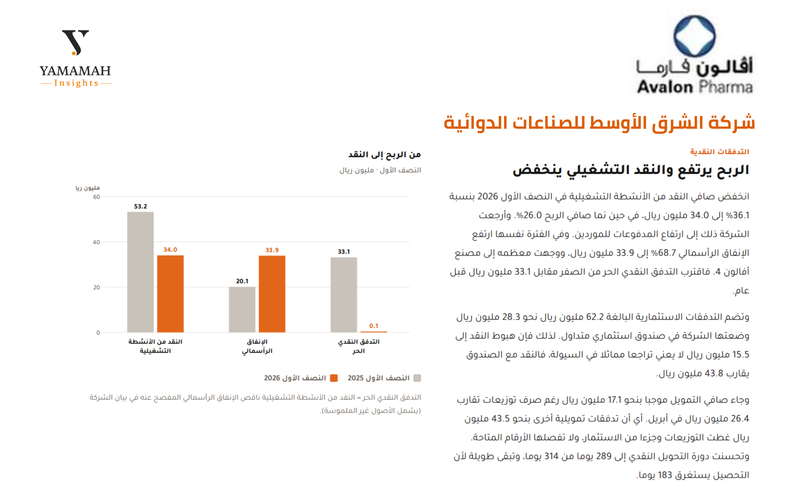
Despite the scale of the opportunity, sales growth does not guarantee higher profits, particularly with capital expenditure increasing by 68.7% and operating cash flows declining by 36.1%.
The agreement gives Avalon Pharma a competitive advantage through exclusive rights to market “tirzepatide” in multiple markets, but its success depends on pricing, product availability, and regulatory approvals—not exclusivity alone.
In my view, the greatest value lies in the possibility of transferring manufacturing technology to the Kingdom, which would improve cost efficiency and pharmaceutical security and support Vision 2030.
Therefore, the agreement’s success should not be measured by projected revenue alone, but by its ability to generate sustainable profitability and cash flows.”
Improving financial performance and developing national expertise in pharmaceutical manufacturing
Student Raneem Asiri @Raneem Asiri emphasized: “I believe this partnership is a positive step for Avalon Pharma because it opens up new opportunities in the diabetes and obesity drug market, which is seeing growing demand.
I believe the expected revenue could help the company expand and improve its financial performance over the long term.
The possibility of manufacturing the drug locally is also an important advantage because it supports Saudi Vision 2030 and creates opportunities to develop national expertise in pharmaceutical manufacturing.”
Sustainable profitability and improved operational efficiency through local manufacturing
Student Ryouf Alsewailim @Ryouf Alsewailim noted: “The projected revenue of SAR 800 million ensures strong sustainability in the company’s profitability and financial growth in the coming years.
Entering the diabetes and obesity drug sector with an alternative product also gives the company a strong ability to compete and attract a broad segment of the market.
In addition, transferring technology and manufacturing locally will increase the company’s operational efficiency and directly support pharmaceutical security objectives and Vision 2030.”
How the speed of commercial launch directly affects sales sustainability
Student Haifa Almutairi @Haifa Almutairi shared her opinion, explaining: “In my view, the Avalon Pharma agreement is a strategic opportunity to boost revenue growth and expand market share, especially given the rising demand for diabetes and obesity drugs.
The option to transfer manufacturing locally may also improve operational efficiency and profit margins in the future.
I believe the agreement’s positive impact will depend primarily on the speed of commercial launch, the ability to compete, and the achievement of sustainable sales.”
Preparing infrastructure and maximizing profit margins through the “Avalon 4” factory
Student Ahmed Al Jadaan @AHMED ALJADAAN explained: “The most important aspect of this agreement is the option to transfer manufacturing technology in the future.
The company is currently making significant capital investments (up 68.7% to SAR 33.9 million) to build the “Avalon 4” factory.
This means the partnership is not merely about marketing and distribution; it is also laying the groundwork for manufacturing these modern medicines at the new factory in the future.
This will maximize its profit margins (currently stable at 21.1% as a net profit margin) and support the Kingdom’s pharmaceutical security.”
Prioritizing cash liquidity management before expanding local manufacturing
Student Yazan Hamoud @Yazan Hamoud added: “I believe the Avalon Pharma agreement is a good growth opportunity, particularly with revenue expected to exceed SAR 800 million over 5 years.
What caught my attention, however, was that operating cash flows declined by 36.1% despite profit growth.
In my opinion, the company should first focus on successfully marketing the drug and generating stable cash flows before expanding into local manufacturing, because higher revenue does not necessarily mean improved liquidity and profitability.”
Linking product expansion to the need for efficient cash liquidity management
Student Mohammad Alghaihab @Mohammad Alghaihab emphasized: “I believe the Avalon Pharma agreement is a positive step, especially since the company expects revenue to exceed SAR 800 million during the first five years after the product launch. This could open up a new source of income and strengthen its presence in the diabetes and obesity drug market.
What caught my attention, however, was the company’s financial position, particularly the fact that operating cash flows fell to SAR 34 million despite profit growth, making liquidity management extremely important as the company expands and launches new products.
In my view, the biggest opportunity is not limited to marketing the drug; it also lies in the possibility of transferring manufacturing technology locally, as this could increase the company’s added value and improve its competitiveness over the long term.
Nevertheless, the agreement’s success will remain contingent on regulatory approvals, operating costs, and actual profit margins.”
Reducing reliance on imports and strengthening supply chain efficiency
Student Nouf Alojayan @Nouf Alojayan noted: “I believe the agreement represents a strong opportunity for Avalon Pharma to increase its revenue and strengthen its market share, particularly amid growing demand for diabetes and obesity drugs.
However, sustainable profits depend on the company’s ability to manage costs, compete effectively, and convert projected revenue into actual profits.
In addition, transferring manufacturing technology locally in the future could reduce reliance on imports and improve supply chain efficiency, while supporting pharmaceutical security and achieving the objectives of Vision 2030.”
Price competitiveness and early registration to strengthen regional market share
Student Shahad Alkhamis @Shahad Alkhamis shared her opinion, explaining: “I believe this partnership represents a major step forward for Avalon Pharma. The target of SAR 800 million in cumulative revenue over five years seems reasonable given the scale of demand for diabetes and obesity drugs.
However, sustainable profitability will depend on the company’s ability to manage profit margins in a competitive market where prices are trending downward as more generic alternatives enter the market.
The most significant competitive opportunity lies in combining an early launch with a competitive price for a drug equivalent to “Mounjaro.” This could give the company a strong foothold in Saudi Arabia and the region if it secures broad coverage through hospital and retail channels before competition intensifies.
Yet the deal’s true value lies in the provision for transferring manufacturing technology. This is what will take Avalon Pharma from being merely a distributor to becoming a local manufacturer of modern medicines, strengthen pharmaceutical security, and align with Vision 2030, while providing the deepest guarantee of sustainable long-term operational value.”
Turning targeted returns into profits and sustainable growth for shareholders
Student Thanaa Alshayib @Thanaa Alshayib explained: “I believe the agreement represents a major opportunity for Avalon Pharma, particularly given the growing demand for diabetes and obesity drugs.
The target of achieving SAR 800 million in revenue over 5 years is ambitious, but the more important question is how this figure will translate into the company’s profits and long-term growth.
More important than anything else, in my view, is the local manufacturing option. It could give the company a stronger competitive advantage, reduce its reliance on imports, and open up greater opportunities to expand in the Saudi market and the region.
In short, the agreement’s success will not be determined solely by the amount of revenue, but by Avalon Pharma’s ability to turn this opportunity into sustainable growth and real long-term profits.”
Moving from distribution to manufacturing to increase operating profit margins
Student Fay Aldossari @Fay Aldossari added: “This is a very strong strategic partnership for Avalon Pharma.
The projected figures (SAR 800 million) reflect the strong demand for diabetes and obesity drugs, and the company’s entry into this sector will provide it with sustainable cash flows.
Most importantly, the technology transfer will take the company from being merely a distributor to becoming a local manufacturer of the latest medicines. This will increase its profit margins and support pharmaceutical security as part of the objectives of Vision 2030.”
Medical education and supply reliability in addressing side-effect concerns
Student Faiz Alhaj @Faiz Alhaj emphasized: “The financial impact of this agreement is very significant. Cumulative revenue of at least SAR 800 million during the first 5 years is a substantial figure—about SAR 160 million annually, or nearly 30% of the company’s current annual revenue—under a contract worth less than 5% of its revenue.
This is revenue, not profit, but with a stable net profit margin of 21.1%, I expect it to support profit growth over the medium and long term.
As for competition in the GLP-1 drug market, I believe Avalon Pharma’s key advantages will be price, local availability, and the speed of registration and distribution in a market experiencing unprecedented global and regional demand.
One challenge is that “tirzepatide” carries the known side effects associated with this drug class, which could affect treatment adherence for some patients.
Therefore, Avalon Pharma’s competitive advantage will depend on demonstrating product quality and safety, and on medical support and education, in addition to price and local availability—especially as other competitors enter after the relevant patents expire.
Regarding technology transfer, I believe the company’s transformation from distributor to local manufacturer is a strategic step.
Manufacturing is a stronger position than distribution alone because it increases margins, reduces reliance on imports, supports pharmaceutical security and Vision 2030, and aligns with the construction of the “Avalon 4” factory.”
Strengthening supply chain resilience and building trust among healthcare professionals
Student @عمر الشيخ noted: “In my view, Avalon Pharma’s exclusive partnership to market “tirzepatide” represents a strategic opportunity to achieve sustainable growth, strengthen the company’s competitiveness, and contribute to the localization of pharmaceutical industries in the Kingdom.
From a financial perspective, the expectation of generating at least SAR 800 million in cumulative revenue during the first five years could help diversify the company’s income sources and strengthen its presence in the diabetes and weight-management drug market.
However, revenue growth does not necessarily mean high profits; achieving them requires efficient management of supply, marketing, and distribution costs, along with monitoring profit margins and cash flows.
From a competitive perspective, exclusive marketing rights could give Avalon Pharma an opportunity to establish a strong position in a rapidly growing market.
But its success will depend on obtaining the necessary regulatory approvals, the expiration of relevant patents, product quality, continued availability, and the company’s ability to offer it at an appropriate price.
Building trust among healthcare professionals and patients will also be an important factor in its success.
Finally, the option to transfer manufacturing technology could create long-term strategic value.
Local manufacturing can strengthen supply chain resilience, improve control over production and quality, help develop specialized national talent, and support Saudi Vision 2030 objectives for localizing pharmaceutical industries.
Nevertheless, the decision to transfer the technology should be based on a thorough assessment of costs and returns, including equipment, technologies, human resources, quality requirements, and regulatory compliance.
In conclusion, I believe the success of this partnership should not be measured solely by projected revenue, but by its ability to generate sustainable profits, ensure reliable pharmaceutical supplies, and strengthen local manufacturing capabilities. The real opportunity lies in turning an exclusive licensing agreement into a sustainable competitive advantage.”
Capturing a strong market share amid growth in the weight-loss drug sector
Student Fahad Alruwaished @Fahad Alruwaished shared his view, stating: “The signing by Avalon Pharma of an exclusive license agreement for “tirzepatide” (the generic product for “Mounjaro”) represents a major step forward in strengthening the company’s revenue and sustaining its profitability over the medium and long term. The product is expected to generate at least SAR 800 million in cumulative revenue during its first 5 years after commercial launch.
Against the backdrop of unprecedented global and regional demand for diabetes and obesity drugs, the availability of this equivalent alternative to “Mounjaro” gives Avalon Pharma an exceptional competitive opportunity to capture a strong market share in the Kingdom and the Middle East and North Africa region, taking advantage of the enormous demand and rapid growth in this vital sector.”
Value-based pricing and product availability as strategic alternatives to stockouts
Student Ghada Alsarheed @Ghada Alsarheed explained: “Several points should be taken into consideration, including the financial impact and targeted cumulative growth of at least SAR 800 million in revenue during the first 5 years.
From a marketing perspective, this success depends on a rapid market-penetration strategy that takes advantage of the enormous pre-existing demand for weight-loss drugs, thereby reducing customer acquisition costs.
This revenue stream also provides the flexibility to reinvest in portfolio diversification and achieve long-term profitability by entering the high-margin biologics sector.
As for competition in the diabetes and obesity drug market, it is experiencing unprecedented global and local demand, alongside supply chain challenges.
Here lies the major opportunity for Avalon Pharma: to offer the advantage of “availability and access” by providing a reliable equivalent alternative that addresses stock shortages.
A value-based pricing strategy can also attract broader consumer segments, spanning both therapeutic uses (diabetes) and cosmetic purposes (weight loss).
The final point is the option to transfer manufacturing technology and strengthen pharmaceutical security. The right to transfer technology represents a radical shift from being merely an exclusive marketer and distributor to achieving local industrial sovereignty.
This shift frees the company from global supply chain risks, strengthens confidence in the product, fully aligns with Vision 2030, and supports government tenders under the “Made in Saudi Arabia” banner, paving the way for the company to become a regional export hub.
The challenge of consumer trust and loyalty can be addressed through evidence-based medical marketing, educational campaigns for doctors and patients, and digital treatment-follow-up programs to ensure continuity.
Price competition can be addressed by focusing on value-based pricing supported by continuous product availability and health insurance coverage, rather than engaging in a losing price war.
Similarly, reliance on foreign suppliers can be addressed by activating the local technology-transfer provision as soon as possible to make the most of national competitive advantages and export to markets across the Middle East and North Africa.”
Reducing import costs and building a market base that can compete regionally
Student Jumana Alshehri @Jumana Alshehri concluded the comprehensive analysis by saying: “I believe the agreement could be a turning point for Avalon Pharma, because the projected SAR 800 million in revenue gives the company an opportunity to expand its business and improve its financial results.
With demand for diabetes and obesity drugs on the rise, the company can benefit from entering the market with a competitive product and build a larger market share for itself.
Most importantly, transferring manufacturing to the Kingdom in the future will give it an additional advantage by reducing import costs, localizing pharmaceutical manufacturing, and supporting the objectives of Vision 2030.”
Financial and structural analysis of the agreement’s impact and future growth drivers
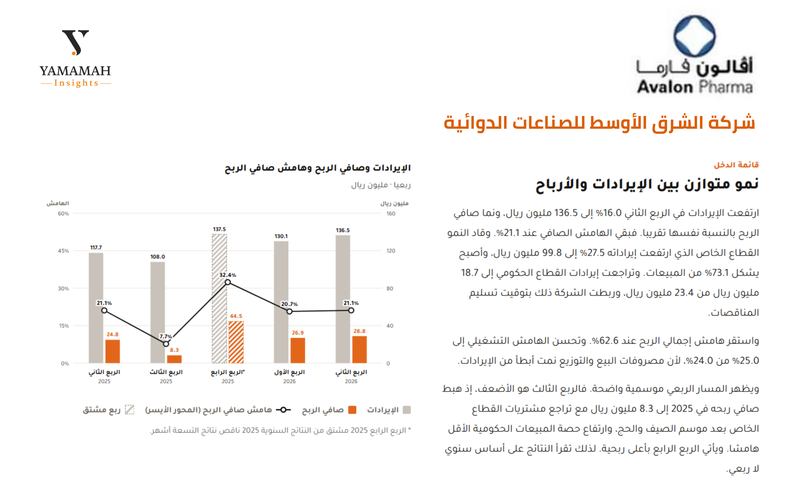
Avalon Pharma’s agreement to market tirzepatide comes as the company is in a financial position that allows it to expand: revenue and profits grew 16% in the second quarter, led by the private sector, while its net margin remained steady at 21%. The agreement’s importance lies in its relative scale: average targeted revenue is equivalent to about one-third of the company’s current sales and shifts its product mix toward higher-value prescription medicines.
The greater value lies in the right to transfer manufacturing technology, which will transform the company from marketing an imported product to manufacturing it in the future, keeping the manufacturing margin within the Kingdom. This aligns with the Avalon 4 sterile products factory and with a market where local production covers around one-third of pharmaceutical consumption, while demand for diabetes and metabolic disease treatments continues to grow.
The timing of returns is linked to patent expirations, while success depends on the company’s ability to compete on price when several generic versions enter the market at once, and to finance sales with a collection period of around six months. With the conversion of profits into cash continuing to improve, the agreement is expected to move from a deferred growth option to a key driver of the company’s long-term profits.
Disclaimer: This material was prepared under the supervision of a “Yamamah Insights” editor and with the assistance of artificial intelligence tools for financial education purposes. It does not constitute a recommendation to buy, sell, or hold any security, and reflects the views of its contributors, not those of the platform.
 Ask Yamami
Comments (6)
No comments yet. Be the first to comment!